What Makes Land in Vrindavan Suitable for Future Home Construction?
29 Sep 2026
There is a big difference between buying a long-term holding to build a home on in the future and buying a plot to use as a home in a few years. Price and location are key factors in buying a plot to hold in the long term but are of little use in working out whether a home can be built on a plot within a few years.
It’s best to purchase a plot that can be used for residential purposes and has a good approach road in the first place. In addition, it should have adequate dimensions for the house that you will construct and connect to the services and other facilities you will need on a day-to-day basis. Ground level, drainage and surrounding development all become important factors when you go from buying a piece of land as an investment to buying a piece of land on which you intend to live.
Start With Land Use and Residential Permission
First and foremost is the question of whether residential construction is permitted on the plot of land in question. Even though a plot may appear to be of the right size and type to construct a house, recorded land use, town planning status or the plot’s location within an unauthorized development may prohibit residential construction.
Also, information regarding Master Plan 2031, approved colonies within the MVDA area under which residential construction is allowed under UP Building & Zoning Regulations, has been provided by the Mathura-Vrindavan Development Authority (MVDA).
Please note that in cases where a plot of land is recorded in agricultural use, additional procedures may have to be gone through to change the land use for construction. What you need to check before you buy:
- Classification of current land use
- Is construction of a residence allowed?
- Approval of layout/colony, if any
- Is conversion of land use necessary?
- Building plan approval, if any
- RERA registration, if the land is a part of a RERA project
For potential buyers researching different types of land in Vrindavan, these types of checks are far more useful than the seller’s description of the property.
You can also read about this in the guide MVDA Approved Plots in Vrindavan vs Unapproved Plots.
Road Access and Plot Dimensions Can Affect the House You Build
A future home needs access not only when completed but also when it is under construction. In addition to materials such as sand and cement, there will be large concrete mixers and other excavation equipment, as well as vehicles to travel to and from the site.
Under the Uttar Pradesh Building Construction and Development Byelaws 2025, minimum road-width requirements are prescribed for residential buildings. For a single residential unit, the minimum road width is generally 4 metres in a built-up area and 9 metres in a non-built-up area, subject to specific exceptions and conditions provided in the byelaws [1].
As part of the site visit, buyers need to examine access to the plot, both legally and physically:
- Width of the access road
- Legally registered and accessible road
- Link to a bigger public road
- Access for construction vehicles
- Condition of the road during the monsoon season
- Access through the neighbour’s private property
The plot itself must be suitable for a future home. Two plots of the same area can be totally different in terms of the best house plan. Plot width, plot depth, plot shape and plot orientation all vary in two plots of the same area.
Check Drainage, Ground Conditions and Utilities
A seemingly ideal plot for your future home could prove to be very costly or have hidden problems found on site investigation. Check ground levels, drainage and how you can access utilities before buying a plot.
Check whether the plot is below the level of surrounding roads and properties, as this may require filling, retaining structures, or additional drainage to be constructed prior to commencement of construction. Try to visit the plot after heavy rain to see how water flows across the site and along adjacent roads.
Assess the ground conditions prior to structural construction of your new home. A geotechnical or soil investigation at the design stage will enable your structural engineer to design your home’s foundations appropriately rather than designing based on neighbouring properties.
For Utilities and Infrastructure:
- Availability of electricity in proximity to the plot
- Arrangement of water supply
- Drainage facilities & wastewater disposal
- Internal roads
- Road lighting facility
- Level of ground compared to road level
- Presence of existing infrastructure or proposed infrastructure
Think Beyond Construction and Consider Future Family Use
A plot may be technically buildable but still not be suitable for long-term family living.
Future needs will require a future residence to house elderly parents from time to time, as well as children, family and friends for longer periods than usual. This demands consideration of the surroundings and the future layout of the property.
Important points to consider are:
- Availability of grocery shops and other necessities
- Access to healthcare within an easily reachable driving range
- Provision of parking facilities on the property site
- Room for a ground-floor bedroom if needed
- Outdoor space or garden facility
- Security arrangements and surrounding occupancy status
- Condition of roads during festival time rush hours
- Accessibility to areas of Vrindavan the family will visit frequently
How Planned Plotted Developments Can Support Future Home Construction
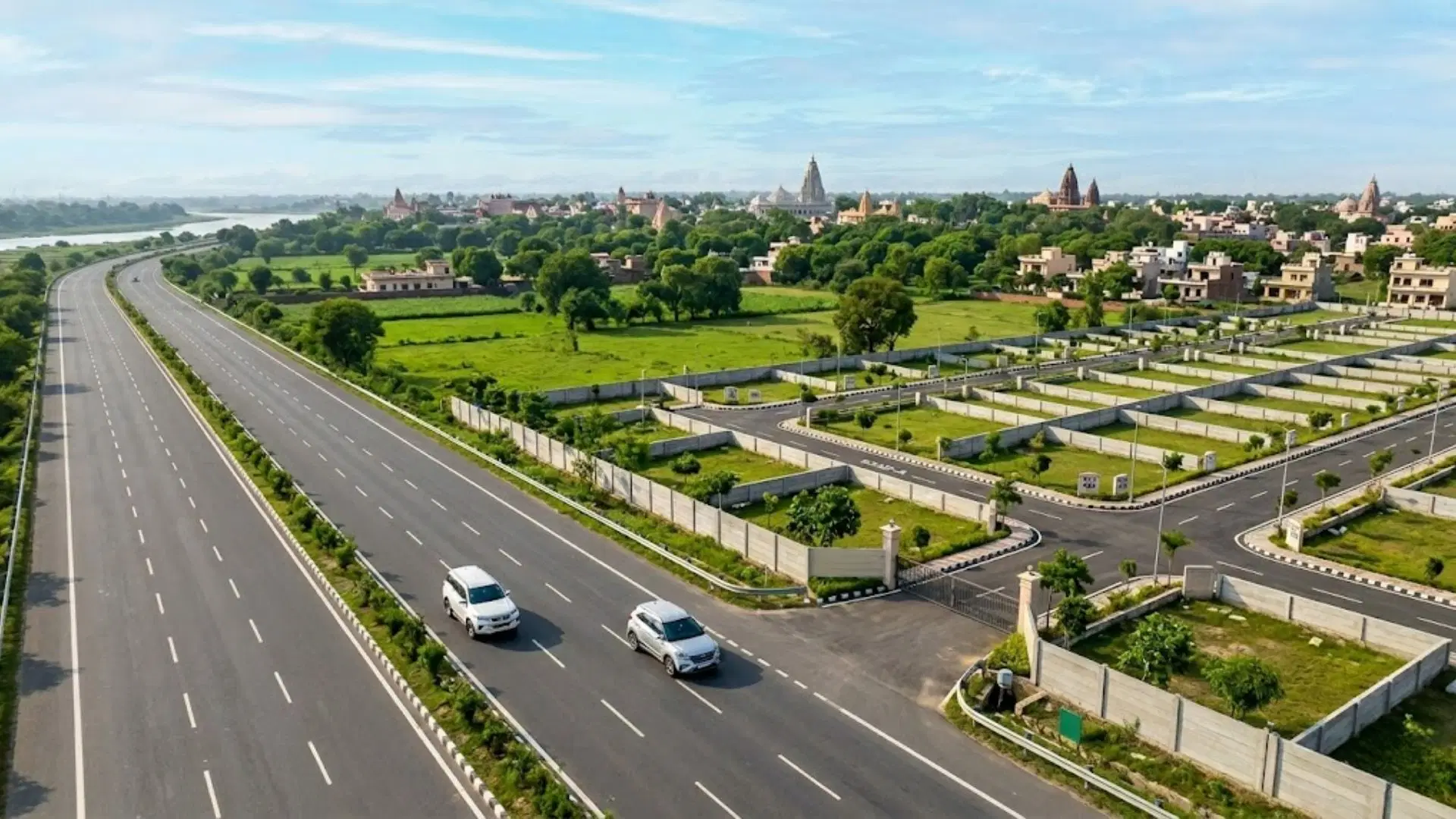
Developments for plots are typically done within the planned development of the site as a whole, and most of the key infrastructure and development details are laid out within the framework for prospective buyers.
Based on the project type, this may include:
- Individual plot allocations
- Roadways within the property
- Drainage systems
- Utility connections
- Landscape/common areas
- Approved site plan for development
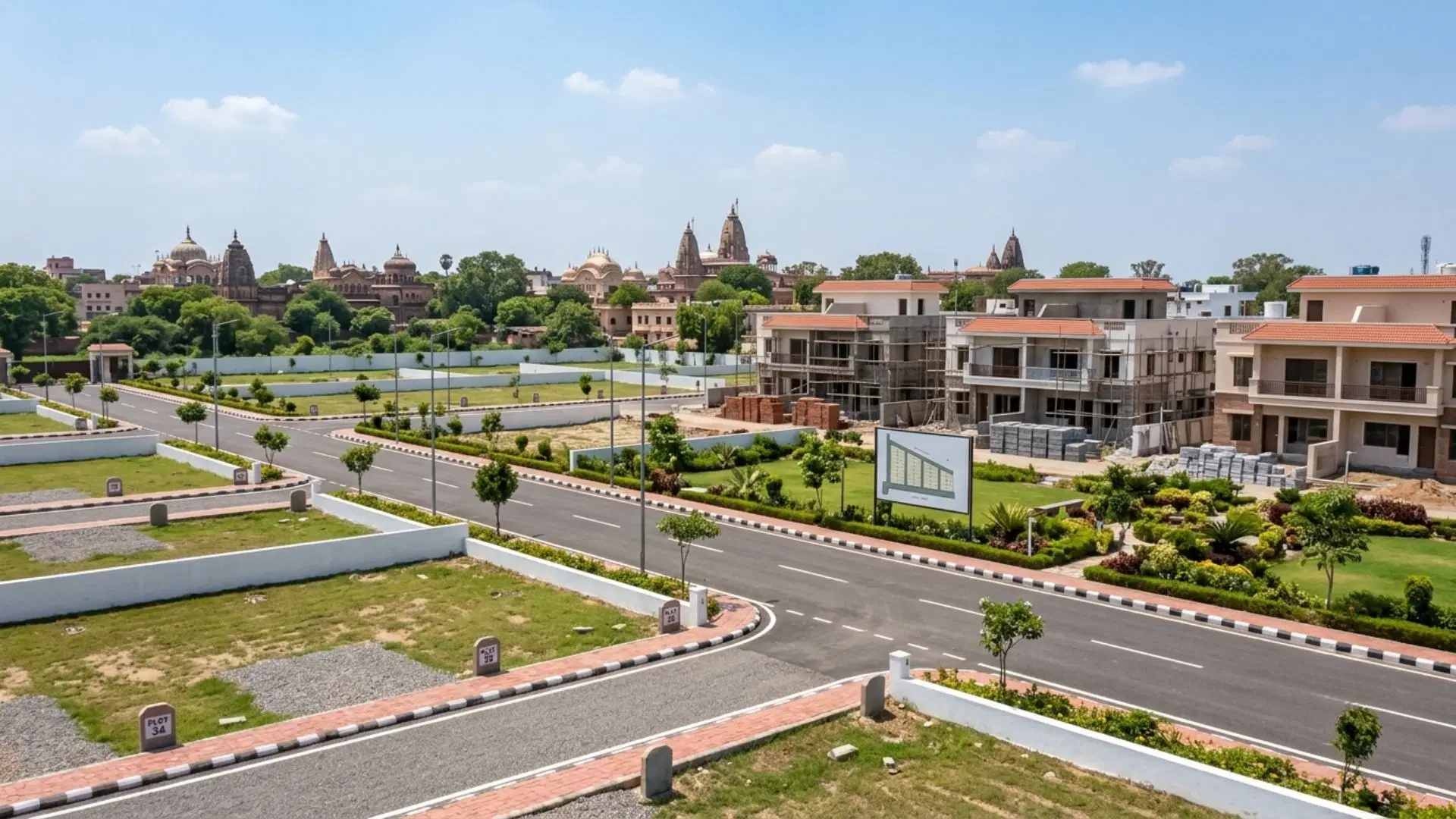
Navratna at Vrindavan Global by The House of Abhinandan Lodha is a plotted development project in Vrindavan. Spread over a large area of 65 acres, it offers various-sized plots like 116 sq. metres or 1,248 sq. ft. and above in a well-planned and developed environment.
What Should You Check Before Buying a Plot for a Future Home?
Checks relating to legal, physical and practical matters should be considered together before a decision is made to purchase a plot of land for residential construction.
Legal and planning
- Check ownership and title documents
- Check land use
- Check layout or colony approval
- Check RERA registration, if any
- Know about future building plan approvals
Plot and construction
- Check plot dimensions and boundaries
- Check frontage, depth, and shape
- Check any setbacks
- Check ground level and drainage
- Arrange for soil testing before structural design
Access and living conditions
- Check legal access to the road and the width of the road
- Check electricity and water supply
- Check drainage and wastewater disposal
- Check healthcare and other daily-use facilities around you
Conclusion
A suitable plot of land for a future home in Vrindavan can be considered only when it functions legitimately, physically and economically. Residential land use and easy road access, adequate dimensions, adequate drainage and other necessary services and a valid construction permit are essential to transform a plot into a home.
FAQs
Can every plot in Vrindavan be used for residential construction?
No, residential construction is dependent upon the individual land’s land-use status, local planning, means of access and relevant approvals, which must be confirmed prior to a purchase of land with a view to constructing a new home.
Why does road width matter when choosing a plot in Vrindavan?
The width of roads off the plot may mean that a plot does not comply with certain aspects of Building Regulations or, after completion of a house, could present problems to access of property by residents or by specialised vehicles to service the property. The road width and subsequent development restrictions of sites vary depending on the location.
What physical features of a plot should be checked before planning a house?
When purchasing a plot, the dimensions of the plot, including frontage, shape, levels, drainage and access, all have to be factored into the design of the house and at times additional site work may be required.