Airport, Railway Station and Ring Road: How Connectivity Is Changing Land Buying in Ayodhya
21 Aug 2026
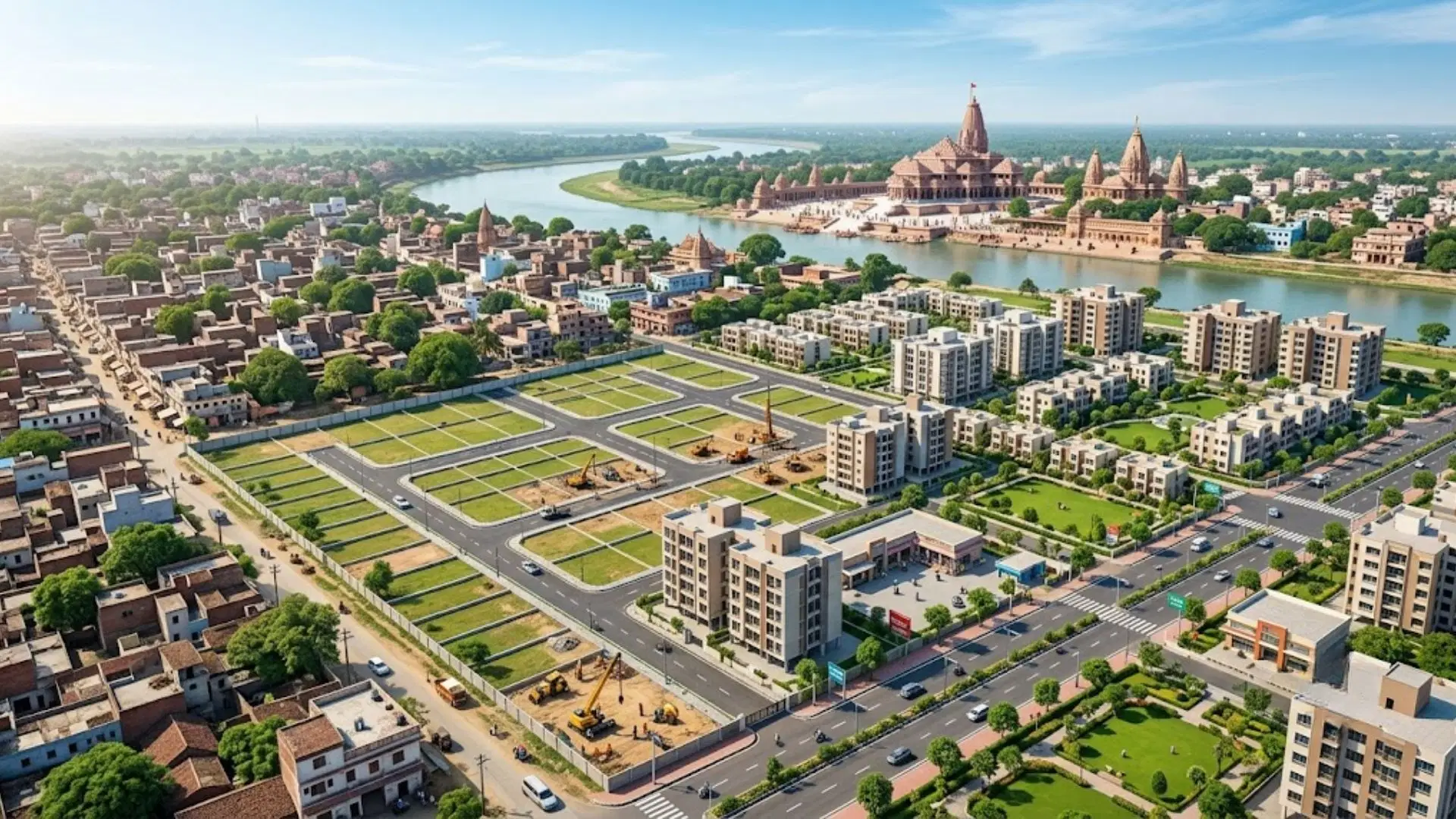
The way buyers look at real estate in Ayodhya has changed a lot. Earlier, temple proximity was a prime factor. Today, airport access, railway connectivity, national highways, local roads and the upcoming ring road are also influencing how land is evaluated.
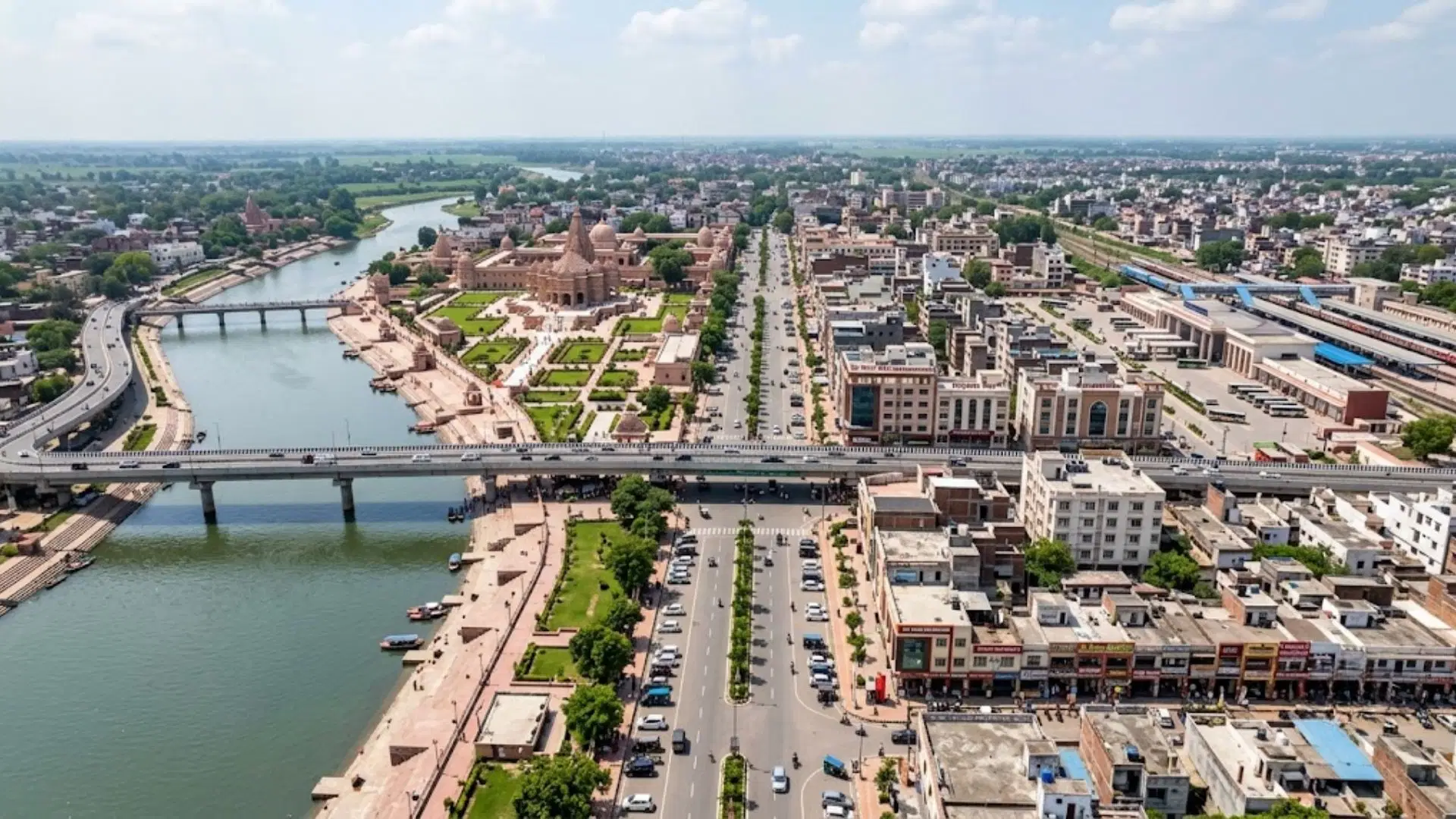
A city with a large footfall needs easy access and smooth movement across different parts of the city through air, rail and road. Thus, connectivity by air, rail and road through national highways, local roads and the ring road under construction would play an important role in influencing the buying decision for land.
The land can no longer be valued for temple proximity alone, but should also be judged on access to the location, connectivity to major roads and infrastructure around the plot for long-term use.
Why Connectivity Has Become Important in Ayodhya
Tourist facilities have come up in Ayodhya after the Ram Mandir was constructed. The number of tourists visiting Ayodhya is rising sharply. As per the Invest UP website, Ayodhya received 57.5 million tourists in the year 2023. After the consecration of the temple, the said numbers went up to over 160 million tourists in the year 2024, and in the first 6 months of the year 2025, estimated devotees visiting Ayodhya were over 230 million [1].
This movement may also generate demand for hotels and guest houses, restaurants, local transportation, retail shops, parking spaces and other services. The demand for land near major access points to the area may also increase.
Road and transport connectivity is important for a buyer studying land for sale in Ayodhya. In the long run, a property that is easily accessible may be more useful than a property that is close to a single landmark but difficult to access.
Learn how temple tourism can boost property demand in Ayodhya with a guide on Ayodhya temple tourism and property demand.
Airport Access Is Changing Long-Distance Travel
Ayodhya has become more accessible to long-distance travellers and tourists with the inauguration of Maharishi Valmiki International Airport.
Maharishi Valmiki International Airport was inaugurated at the end of December 2023. More than ₹1,450 crore has been spent on the development of the airport in Phase 1. The terminal building of the airport has been developed over 6,500 sq. meters and is capable of handling 10 lakh passengers in a year [2].
It enables travellers to travel to and from Ayodhya more easily, including buyers from Delhi, Mumbai, Bengaluru, Ahmedabad or other cities in India.
The passenger numbers to and from Ayodhya airport have grown sharply. The airport saw 2 lakh travellers in Financial Year 2023-24, but the very next year, the numbers shot up to 11 lakh+ travellers [3].
For real estate buyers, airport access can influence:
- Second-home decisions
- NRI and long-distance buyer interest
- Weekend or short-stay travel
- Hospitality demand
- Premium plotted development interest
- Ease of family visits
- Long-term city visibility
The buyer should take into consideration all parameters before labelling a property as ‘near airport’. The buyer should analyse the time taken to reach the airport and the road conditions to reach the airport. He or she should also identify the route that leads to the airport and the land use in surrounding areas to ensure the location is suitable for residential or long-term use.
Railway Station Redevelopment Supports Pilgrim and Family Movement
Airport access is important for long-distance buyers and tourists, but for Ayodhya, rail access is also extremely important. There are numerous pilgrims, families and visitors who travel by train from across cities and towns of Uttar Pradesh, Bihar, Delhi-NCR and the rest of India.
The Ayodhya Dham Junction Railway Station has been redeveloped. The Press Information Bureau stated that more than ₹240 crore had been spent on the completion of Phase 1 of the redeveloped Ayodhya Dham Junction Railway Station. The new three-storey building is 11 meters high from floor level. The building provides facilities such as lifts, escalators, food plazas, shops for food and puja-related articles, cloak rooms, child care rooms and waiting halls. The building is accessible for all disabled persons and is an IGBC-certified green building [4].
For land buyers, rail connectivity is relevant because it affects movement to and from areas near railway routes, main station roads and local transport points.
Even if the family members themselves are not travelling to Ayodhya by rail, their guests, tenants, service staff and so on may travel to Ayodhya by rail. There could also be pilgrims travelling to Ayodhya by rail. The redeveloped Ayodhya Dham Junction Railway Station is more than just a terminal to board a train; it is a major transport hub in the city’s movement.
Ring Road Can Change How Buyers Read Ayodhya’s Map
The ring road is also a connectivity factor for property in Ayodhya. The ring road approved for Ayodhya may influence real estate activity. Although a ring road in isolation may not command any premium in the value of real estate, it is a decongestion tool within the city. Thus, the value of this new road would be in reducing pressure on roads within the city.
The Cabinet, in August 2024, gave approval to develop a 68 km, 4-lane access-controlled Ayodhya Ring Road at a total capital expenditure (CapEx) of INR 3,935 crore. The purpose of this new road would be to reduce traffic on the national highways passing through the city, i.e. NH 27, NH 227A, NH 227B, NH 330, NH 330A and NH 135A, and also to help in the swift and easy movement of pilgrims to Ram Mandir and tourist traffic to Lucknow International Airport, Ayodhya Airport and the various railway stations in the city [5].
A ring road can influence:
- Entry and exit movements
- Traffic flow
- Access to outer expansion areas
- Hotel and service sites
- Land adjoining connecting roads
- Movements between railway, airport and temple zones
- Urban expansion over the long term
It is important to keep track of proposed and approved infrastructure projects, but buyers should not treat them as a guarantee of land appreciation. Appreciation in the value of land would depend upon various parameters such as location of the plot, distance from point of access, width of road, land-usage permits, etc., and when these would be completed.
Why Last-Mile Access Matters More Than Distance on Paper
The location of a real estate project, such as distance from the airport, railway station, Ram Mandir or a highway, etc., is just a pointer. This gives the buyer a general idea, but it does not show the full picture of where the property is actually located.
When land is shown in relation to a local landmark on a plan, the distance to this landmark as shown on paper can be vastly different from the actual time taken to travel to this point. This can be influenced by a variety of factors including the width of the road, traffic density, detours on the road, local access to the plot, provision of parking, etc. In a place like Ayodhya, this can also be affected by monsoon weather and large numbers of devotees that visit during religious festivals.
The purchaser must verify:
- Driving time during various times of the day
- Width of approach road
- Linkage with NH 27 or other major roads
- Weekend traffic and traffic during festivals
- Distance from airport and railway station
- Access to the Ram Mandir zone
- Public or local transport facility
- Right of access to the plot
Projects under development, such as The Sarayu by The House of Abhinandan Lodha in Ayodhya, can be reviewed differently from standalone land. The Sarayu by HoABL is a plotted development located on the banks of the Sarayu River, off National Highway 27. The Sarayu is approximately 15 minutes from the Ram Mandir, 20 minutes from Ayodhya Dham Railway Station and 30 minutes from Maharishi Valmiki International Airport. The project comprises individually demarcated plots and is RERA registered.
Information in relation to location, landmarks around the plot and design of the project is crucial. However, verification of RERA registration, all other approvals, terms for possession, maintenance charges, etc., and most importantly, physical access to the plot is critical.
Connectivity Is Expanding the Search Beyond One Area
As Ayodhya’s transport network improves, buyer interest may not remain limited to only the temple core. Better roads, railway facilities, airport access and ring road planning can widen the real estate map.
A plot on a main road could be more relevant for one buyer, while a larger plot in a quieter area could be more suitable for long-term residential use for another buyer. A planned plotted development may appeal to a certain set of buyers who want amenities like a community hall, swimming pool, etc., and clear internal planning. A standalone plot, on the other hand, may suit buyers who want more flexibility but are comfortable with deeper due diligence.
This is why connectivity should be read along with:
- Land-use permissions
- Legal title
- Plot size and shape
- Road access
- Utilities
- Surrounding development
- Distance from public facilities
- Future planning zones
- Possession timeline
- Long-term usability
The guide on choosing the right plot in Ayodhya will be useful to a buyer who is trying to compare various locations for the purchase of a plot in Ayodhya, as plot values can vary greatly based on access to a plot, documentation required, location of the plot and development potential of the land parcel.
What This Means for Land Buyers
While connectivity can improve the value of land, it should not replace due diligence on other parameters while shortlisting a property. Proximity to an airport, railway station or future road project should not automatically qualify a property for purchase.
Instead, they should ask practical questions:
- Is the plot legal and unambiguous?
- Is the access road functional all year round?
- Does the land abut a major road or only smaller internal paths?
- How much time does it take to reach the airport, the railway station and the temple area?
- What is the land use around the plot - residential, commercial, mixed-use or undeveloped?
- Are there any facilities like water, electricity, drainage, etc.?
- Is the project RERA registered, where applicable?
- Are the possession and maintenance terms clearly explained?
Conclusion
The airport, railway station and ring road are changing the way buyers view real estate in Ayodhya. Location is not just about being near temple(s) anymore. Factors of access, mobility, travel and infrastructure are being woven into the real estate map of Ayodhya, along with the emotional connect and religious value the city offers.
A buyer should compare the chosen location on both emotional value and practical factors such as legal clearances, access, approvals from relevant authorities and availability of basic amenities like power and water. A buyer should also check the quality of the location and its future use. Yes, connectivity can add to the attractiveness of a location, but careful analysis is required to make the right decision.
FAQs
How is airport connectivity changing land buying in Ayodhya?
Ayodhya is now easier to reach with the airport becoming a connectivity hub for long-distance travellers, NRIs, families and second-home buyers. Airport connectivity is another influence that can affect buyer interest in property for sale near the airport area as well as city areas connected to the airport and main city roads. One must check actual travel time, road connectivity and land-use permits.
Why does the Ayodhya Ring Road matter for property buyers?
Development of the Ayodhya Ring Road is planned in Ayodhya to reduce traffic on highways passing through the city and to facilitate smooth movement of pilgrims and tourists. It is expected that some locations on the ring road may become more accessible than others over a period of time, but it is advisable to verify the location of the plot, exact access point and expected completion date of the project before making any decision.
Is railway connectivity still important in Ayodhya real estate?
Yes. Ayodhya’s rail connectivity is an important factor as it enables long-distance travellers, pilgrims and families to travel easily to Ayodhya by train, and the newly redeveloped Ayodhya Dham Junction provides better services and facilities to passengers.
Should buyers buy land only because it is near the airport or ring road?
Just being near the airport, railway station or ring road is not enough. One must check the property’s legal documents, land-use permission, access road to the plot, availability of utilities like water and electricity, approvals from the local municipal body, RERA registration, if applicable, possession terms and practical usability of the plot in the long run.
Sources
- https://invest.up.gov.in/wp-content/uploads/2025/11/6-Ayodhya_251125.pdf
- https://www.pib.gov.in/PressReleaseIframePage.aspx?PRID=1991757®=48&lang=2
- https://currentaffairs.khanglobalstudies.com/up-records-a-146-rise-in-air-passenger-traffic/
- https://www.pib.gov.in/PressReleasePage.aspx?PRID=1991755®=48&lang=2
- https://www.pib.gov.in/PressReleasePage.aspx?PRID=2041027®=48&lang=2