Branded land vs unbranded land plots in India — which gives better returns?
Branded Land vs Unbranded Land Plots in India: Which Yields Better Returns?
The main difference between branded and unbranded plots is not simply the price. A branded plot usually comes with a planned layout, developer-backed infrastructure and a more organised documentation process. An unbranded plot can be cheaper, but the buyer normally has to take on more of the checking.
So, when comparing Branded land vs unbranded land plots in India, the better return depends on more than the final sale price. Purchase cost, location, holding period, resale and risk all matter.
This article compares the two options on appreciation, IRR, cash flow, location, risk and investor suitability.
Branded vs unbranded land plots in India: the basic difference
What counts as branded land
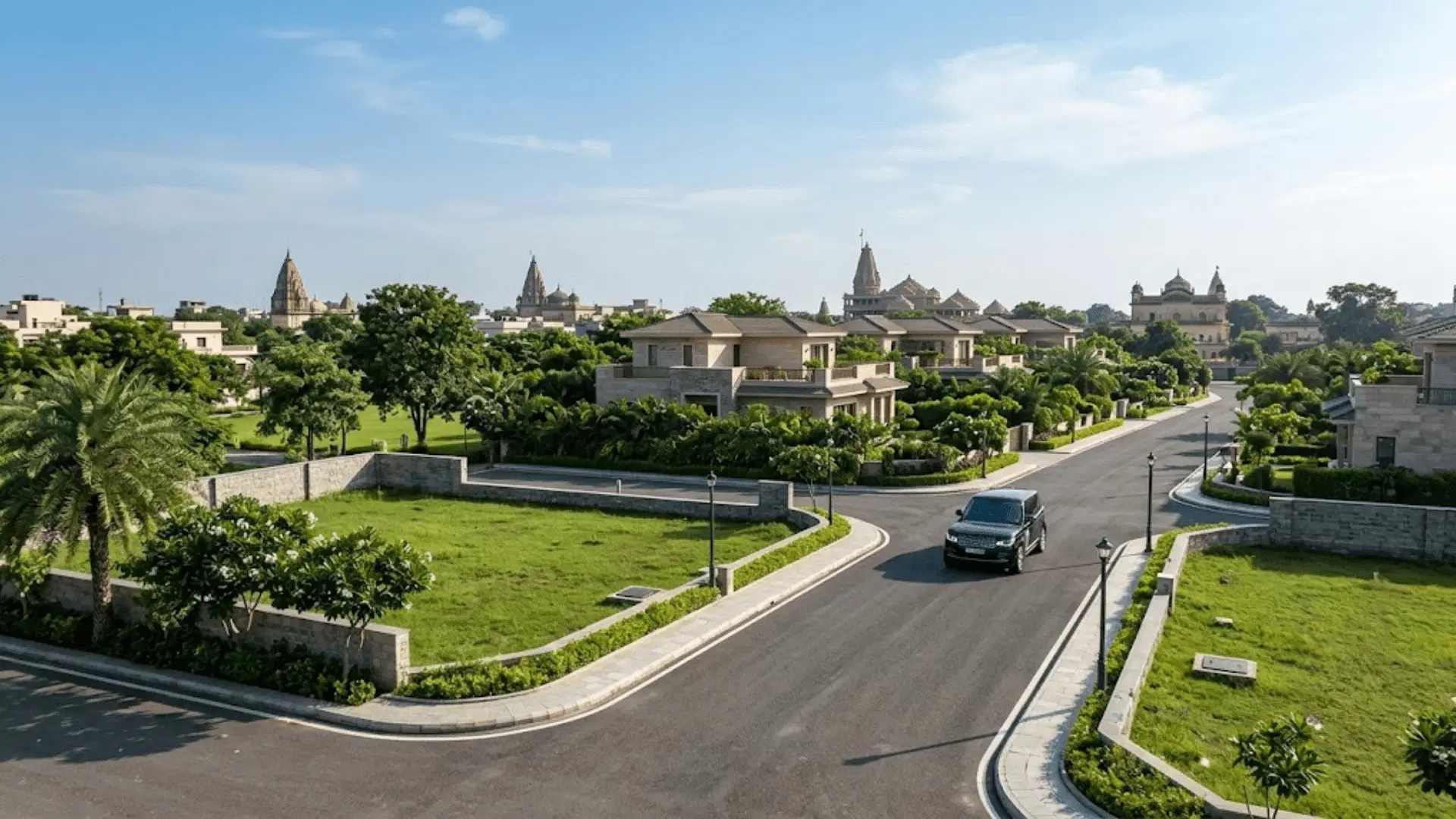
Branded land is generally sold by an established developer within a planned and RERA-registered layout. The project may include internal roads, drainage, power, landscaping and common amenities.
Unbranded land is usually sold by an individual owner, local seller or smaller developer. The buyer has more responsibility for checking the title, land use, access and available services.
How the market views each
Branded plots are often considered easier to assess because the project is organised around a developer. That convenience comes at a price.
Unbranded plots usually have a lower entry price. They can also give buyers more flexibility, provided the legal and development checks are clear.
A consultant quoted in a business press report said branded projects in some outskirts markets can command a 30 to 40 per cent premium over local developers. The suggested benefit is easier resale. It is still only a market observation, not a return guarantee.
Anarock chairman Anuj Puri has pointed out that infrastructure and micro-location can increase prices by 30 to 80 per cent in some areas. This shows why the location should be assessed separately from the developer's name.
Return metrics comparison: appreciation, IRR and cash flow
Capital appreciation
Land does not appreciate simply because it comes from a recognised developer. Location, supply, infrastructure and timing have a major role.
The Yamuna Expressway illustrates this. Anarock's Q2 FY26 research newsletter reported plot rates of Rs 1,650 per square foot in 2020 and Rs 10,500 in 2025. That represents a 536 per cent rise, compared with 158 per cent for nearby apartments.
These numbers show the effect of a strong corridor. They do not establish that branded plots have higher returns than unbranded plots. There is no public dataset I could find that breaks investor returns down by brand.
A 2026 market report put weighted average plot launch prices at Rs 3,679 per square foot after a 27 per cent increase in 2024. Buyers entering later therefore face a higher starting point.
IRR and the cost of waiting
IRR takes the holding period into account. This matters because two investments can have the same total gain but different annual returns if one takes longer to sell.
Reports may quote IRR when discussing the developer's land business. That should not be confused with an individual buyer's return.
For your own calculation, use the total purchase cost, sale price and holding period.
The following figures are illustrative.
Both examples produce the same 50 per cent gain. The branded example has a better annual return because it exits earlier. The unbranded example needs less capital.
These figures are only examples. A different entry price or holding period can change the result completely.
Cash flow
Land does not provide regular rent. At purchase, there are stamp duty and registration costs. During the holding period, the owner may pay property tax and maintenance charges. Tax can also apply to the gain when the property is sold.
Branded projects may have common-area maintenance charges. An unbranded plot may require spending on access, fencing or legal issues.
Since land tax rules changed in 2024, check the applicable capital gains treatment with a chartered accountant based on the purchase date.
Location and infrastructure drivers
The surrounding location can matter more than the developer's brand.
Yamuna Expressway and Greater Noida: The Anarock data shows how a growing corridor can lift plot prices. Both branded and unbranded plots in the area can benefit from the same infrastructure growth. Documentation and resale can still differ between individual properties.
North Bengaluru: A 2026 plotted-market report lists Prestige projects in Devanahalli and Yelahanka. Godrej Reserve is located between the airport and Nandi Hills. Magicbricks' Q4 2024 enquiry analysis recorded Bengaluru at 36.5 per cent of plot enquiries, followed by Chennai at 11.0 per cent.
Gurugram, Chennai and other markets: Trade reports have identified Sohna and Sector 72 as plotted launch areas in Gurugram and Vandalur and West Tambaram in Chennai. HOABL has projects in Goa, Mumbai, Nagpur, Alibaug and Ayodhya, including plots in Ayodhya.
Check the actual status of proposed infrastructure before relying on it. A project that is announced is not the same as one that has been sanctioned, funded or started.
Risks associated with each type
Legal risk
Branded projects can make the initial document review more straightforward because the developer provides project records and RERA information. That does not mean the title should be accepted without an independent check.
With unbranded land, the buyer may need to spend more time checking the ownership chain, land-use conversion, encumbrances and possible claims.
HOABL's project documents page collects approvals and legal references for select developments.
Market risk
A branded plot is still exposed to the wider market. If demand falls in the area, the brand will not prevent prices from slowing.
The premium can also affect returns. If you pay significantly more at the start, the property has to appreciate enough to cover that difference.
Too much new supply can create another problem. Buyers may have several similar projects to choose from, which can make resale slower.
Liquidity risk
Plots can take time to sell. Do not assume that a property can be converted into cash quickly just because it is in a branded project.
Branded layouts may appeal to buyers who want organised projects and easily accessible documents. Unbranded plots can appeal to buyers who focus more heavily on price.
Keep enough liquid funds outside the property to manage a longer holding period.
Investment suitability
Cautious, long-horizon investors: A branded project can suit buyers who want a more organised purchase process and are comfortable paying a premium. The investment still needs a strong location and reasonable entry price.
Investors who can do their own diligence: An unbranded plot may work for buyers with legal support and local knowledge. The lower purchase price can help, but more responsibility stays with the buyer.
Short-horizon buyers: Neither option is ideal when the planned holding period is only two or three years. Purchase costs and resale time can reduce the benefit of a small price increase.
NRIs and remote buyers: RERA records and organised project documentation can make remote evaluation easier.
Case studies and real-world examples
Public data does not provide a direct comparison of investor returns from branded and unbranded plots. These examples therefore show demand and location trends rather than proving one category is more profitable.
Yamuna Expressway corridor: Anarock reported a 536 per cent increase in plot rates between 2020 and 2025. The figures highlight the effect of strong corridor growth.
Prestige's plotted launches: Business Standard reported in 2021 that Prestige Estates sold more than 800 plots in one launch. This indicates demand for a listed developer's project, but it does not show the eventual return earned by those buyers.
Godrej Evora Estate, Panipat: Godrej Properties reported plot sales above Rs 1,000 crore at Evora Estate since its December 2025 launch. The sales figure indicates demand, not the return investors will eventually make.
HOABL's Ayodhya offering: HOABL's homepage presents The Sarayu Gold as villa land on the banks of the Sarayu. Buyers should verify RERA registration, title and approvals before paying.
Which yields better returns?
There is no fixed winner. Location affects the potential for appreciation. The holding period affects the annual return. The purchase price affects how much growth is needed before the investment becomes worthwhile.
Branded land vs unbranded land plots in India is ultimately a choice between paying a premium for an organised project and paying less while taking on more due diligence.
A branded plot may make more sense for a buyer who wants clearer project information and planned infrastructure. An unbranded plot can work for an experienced buyer who can verify the property and find a good location at a lower price.
If you are comparing developments, HOABL's projects page lists current options. Whichever option you choose, have the paperwork checked by a lawyer before paying.
FAQs
Do branded land plots give better returns than unbranded plots?
Not necessarily. Location, entry price and time to sell are major factors. A branded plot may have a higher purchase price but can be easier to resell. An unbranded plot may offer a lower entry point and stronger percentage returns if the location performs well.
Why do branded plots cost more?
The price may cover land development, approvals, infrastructure, amenities and the developer's brand. Ask for a per-square-foot breakdown and compare it with the cost of developing an unbranded plot.
Is an unbranded plot always riskier?
No. The buyer simply has more verification to do in many cases. Ownership records, land-use conversion, encumbrances and access should be checked carefully. Legal advice can help manage the process.
Is land a good source of regular income?
Not normally. A plot does not generate rental income by itself. Property tax and maintenance expenses may continue during the holding period. The main return generally comes from selling the property later.