How Infrastructure Timelines Impact Land Valuation?
01 Aug 2025
Most people think of infrastructural investments only in terms of location. Upon the announcement of a project in any upcoming area, they eagerly jump aboard in hopes of doubling their life savings. However, when you invest in land, timing is sometimes more important than location.
That’s why a seasoned investor waits and watches out for signals predicting the appreciation or depreciation of that project for land valuation. They know that entering a delayed project might tank their investments. Vice versa, a policy-backed project might generate maximum profits.
But what are these signals, and how do they affect a project? Read on to find out all about it.
Indian Infrastructure Case Studies: When Timelines Impacted Land Valuation
Key Infrastructure Project Signals to Look Out For
There are two types of infrastructure projects in India: those that are actually progressing and ones that are merely being talked about.
It might be difficult to differentiate between the two by just looking at their designed brochures. However, the good thing is that there are a few clear indicators that help you identify them vividly, so you can decide whether to buy, hold, or simply walk away from that project.
1. Public Announcements vs. Actual Progress
Referring to public announcements is useful when trying to spot the upcoming real estate zones. However, to identify forthcoming growth corridors and infrastructure growth potential, look at the following:
- Policy documents (like ‘Gati Shakti portal’)
- Master plans (like ‘Delhi Master Plan 2041’)
- Budget speeches, such as the Union Budget 2025, which allocated ₹11.21 lakh crore towards infrastructure
- Government press releases
2. Administrative Tenders & Approvals
Out of 1,623 highway projects, 552 (about 34%) are delayed. It’s due to many reasons like miscommunication, approval delays, disputes, etc. So, it is always important to look out for the following details:
- Tender floated and awarded
- Land acquisition & environmental clearance
- Detailed Project Report (DPR) approval
You can look up these details at the official websites of Bharat Mala, CPWD, Metro Rail projects, Indian Railways, and NHAI.
3. Physical Mobilisation & Groundwork
Nothing beats the physical signs of work in progress, such as a contractor’s presence, a site office, piling, earthwork and fencing. Monitor such progress closely.
You can also look at RERA filings or local newspapers to track contractor updates from your home or visit the Google Earth website to view construction in the area.
4. Project Dashboards & Reports
Want to know whether the land you own is in a progressing zone or a stalled zone? Check out the PM Gati Shakti portal; transport updates are from the Ministry of Roads or state-level infrastructure sites (like YEIDA, GMDA, or MahaInfra).
All these sources give you the percentage of infrastructure growth, delay flags, revised deadlines, and milestone status (such as laying a foundation or installing bridge girders).
5. Community Reports OR Local Buzz
Never ignore the community chatter. They often predict project delays before the official data. Ask around in the municipal office and tehsil office, or get in touch with resident forums and local brokers. They can enlighten you about:
- Work halted due to litigation or protests
- Hurdles in local authority permissions
- Rumours about project cancellation
**Final Checklist **
Make well-informed decisions about when to buy land, sell it or hold it. Keep the following checklist always in mind.
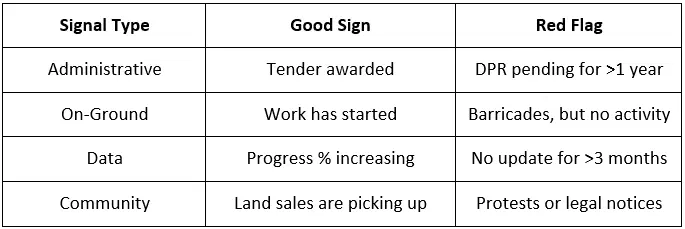
If you know where to listen, the signs are always there. Because when it comes to infrastructure, progress is not promised. It’s proven!
Related Blogs

Mumbai to Goa in 6 Hours
17 Jul 2025

Why Social Infrastructure Is Key to Sustainable Land Value
26 Jul 2025

How Growing Infrastructure is Pushing Land Prices in Tier 2 Cities
18 Jul 2025