How Vrindavan Tourist Places Shape Real Estate Opportunities
26 Mar 2026
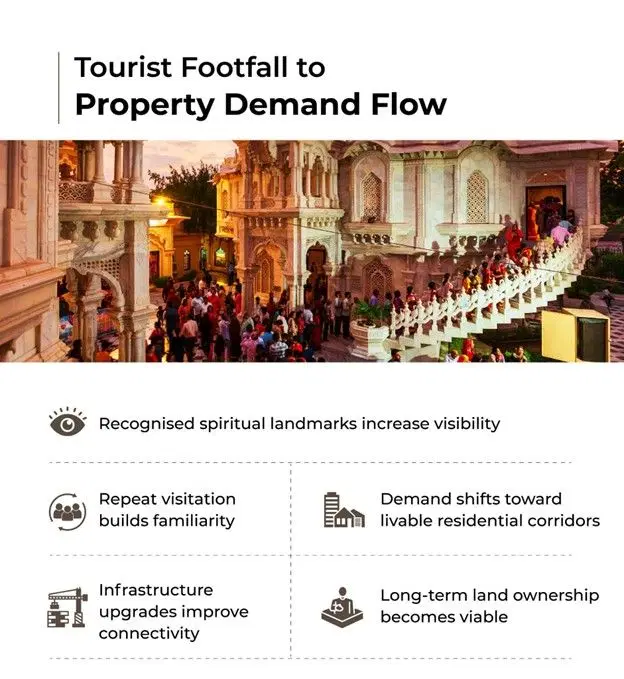
Vrindavan’s growth is deeply connected to the rhythm of pilgrimage and cultural travel. The steady flow around Vrindavan tourist places continues throughout the year, shaping not only hospitality but also long-term residential patterns. Unlike destinations driven purely by seasonal tourism, Vrindavan demonstrates continuity through daily spiritual activity and recurring pilgrim visits.
Landmarks such as Banke Bihari Temple, Prem Mandir, and ISKCON Vrindavan attract visitors of all ages. Residential demand spreads around such locations that allow access to tourist places near Vrindavan while maintaining everyday livability.
Major Vrindavan Tourist Places as Demand Anchors
The presence of well-known Vrindavan tourist places contributes to the city’s visibility at the national and global levels. These landmarks draw recurring pilgrim inflow, sustaining commerce, infrastructure upgrades, and mobility improvements.
Some key destinations include:
- Banke Bihari Temple
- ISKCON Vrindavan
- Prem Mandir
- Nidhivan and Yamuna Ghats
- Radha Raman Temple
- Seva Kunj
It has also been widely reported that Mathura-Vrindavan records extremely high visitor volumes annually, reinforcing the continuity of pilgrimage-led movement across major Vrindavan tourist places.
This sustained activity strengthens town-wide real estate relevance rather than concentrating demand around only one location.
Corridor-Based Living Beyond Tourist Clusters
While central temple zones remain culturally significant, modern buyers evaluating Vrindavan places to visit prefer a balance between spiritual access, residential calm and well-connected areas.
Buyers today evaluate:
- Road connectivity to key Vrindavan tourist places.
- Ease of access to Govardhan and the broader Braj pilgrimage circuit.
- Availability of planned land developments with supporting infrastructure.
The presence of Anant Krishna Mandir contributes to the spiritual character of the area, while ongoing development and improving connectivity are also shaping interest in residential land in Vrindavan across well-connected corridors.
Infrastructure And Connectivity Strengthening Demand
Reporting on Braj-region development highlights ongoing investments aimed at improving heritage tourism infrastructure and mobility, further strengthening accessibility to tourist places near Vrindavan.
Buyers exploring real estate investment opportunities increasingly look toward planned developments. This shift supports a broader understanding of places to visit in Mathura Vrindavan as part of a larger urban ecosystem rather than isolated attractions.
Property Types That Align with Tourist-Led Growth
Continuous activity around tourist places near Vrindavan supports certain formats more consistently than others.
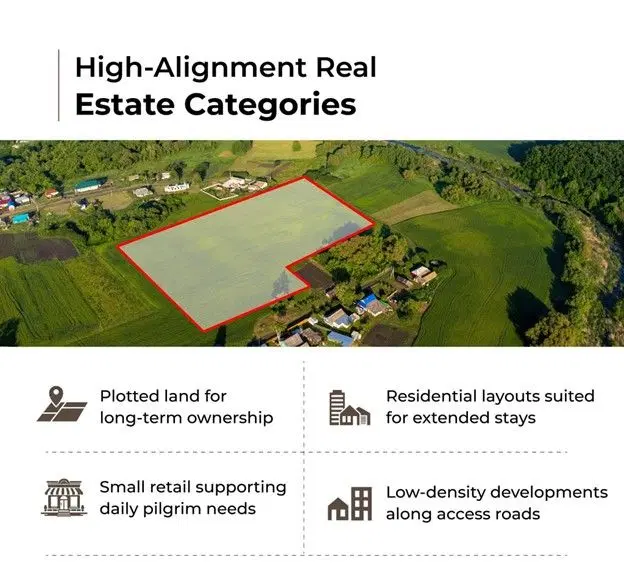
These formats respond to sustained demand without relying on short-term rental spikes.
Educational Insight for Buyers
Individuals researching real estate investing tips for Vrindavan notice that demand spreads outward over time as infrastructure improves and visitors transition into long-stay residents.
Key Observations:
- Vrindavan tourist places act as visibility anchors
- Residential livability improves along connected corridors
- Land demand strengthens through continuity rather than speculation
Understanding this dynamic allows buyers to make informed decisions aligned with long-term ownership.
Conclusion
Major Vrindavan tourist places continue to function as demand drivers that sustain movement, commerce, and infrastructure across the town. Yet modern residential preference increasingly shifts toward access corridors that balance spiritual engagement with everyday comfort.
Locations along Radhakund Road illustrate how connectivity to multiple tourist places near Vrindavan can support long-term land ownership without the challenges of crowded temple zones. Projects by The House of Abhinandan Lodha Vrindavan align with this evolving pattern, offering structured land opportunities designed for sustained relevance.
Explore thoughtfully planned land opportunities with The House of Abhinandan Lodha Vrindavan and discover how Vrindavan tourist places continue to shape meaningful long-term ownership across the region.
Related Blogs
How Famous Temples in Vrindavan Shape Property Demand
20 Mar 2026
How Year-Round Tourism Fuels the Vrindavan Real Estate Market
04 Feb 2026
Things to Do in Vrindavan (And Why It’s Driving Real Estate Demand)
23 Mar 2026
Codename S.E.Z. Vrindavan
Vrindavan, Uttar Pradesh
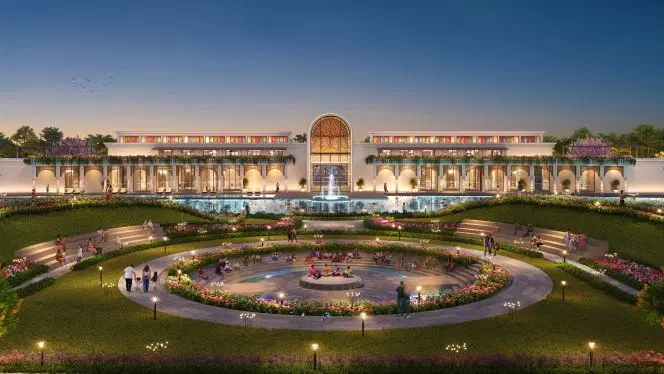
World’s Only Sensorial Branded Land Development in Vrindavan.
1248 sq. ft
Starting at ₹ 1.35 Crore(all-in)
The Raas Villas
Vrindavan, Uttar Pradesh
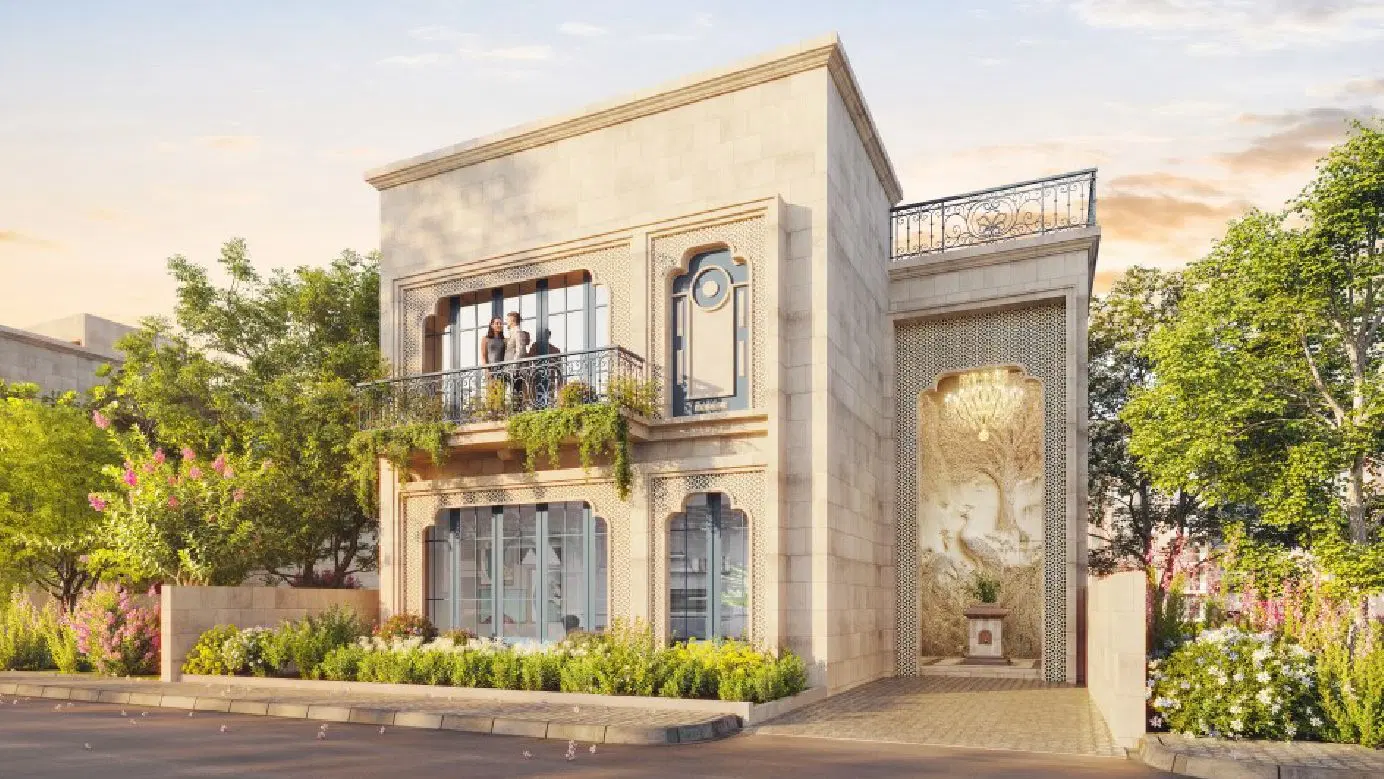
An invite-only collection of 12 exclusive heritage villas, crafted to be heirlooms for generations.
2002 sq. ft
Starting at ₹ 4.75 Crore(all-in)