Best Land Investment Opportunities in Nagpur 2026
01 Oct 2026
Nagpur features in a CII-Knight Frank India report, covered by ANI in September 2026, as one of 11 markets where residential prices recorded an 8% compound annual growth rate between 2016 and 2026. The corresponding figure for the top eight metros was 4%. Nagpur is also the eastern terminus of a 701-kilometre expressway, fully completed in June 2025. Put together, these developments give the city a more established infrastructure story than many other tier-2 cities making a similar case.
Two major projects are already in place.
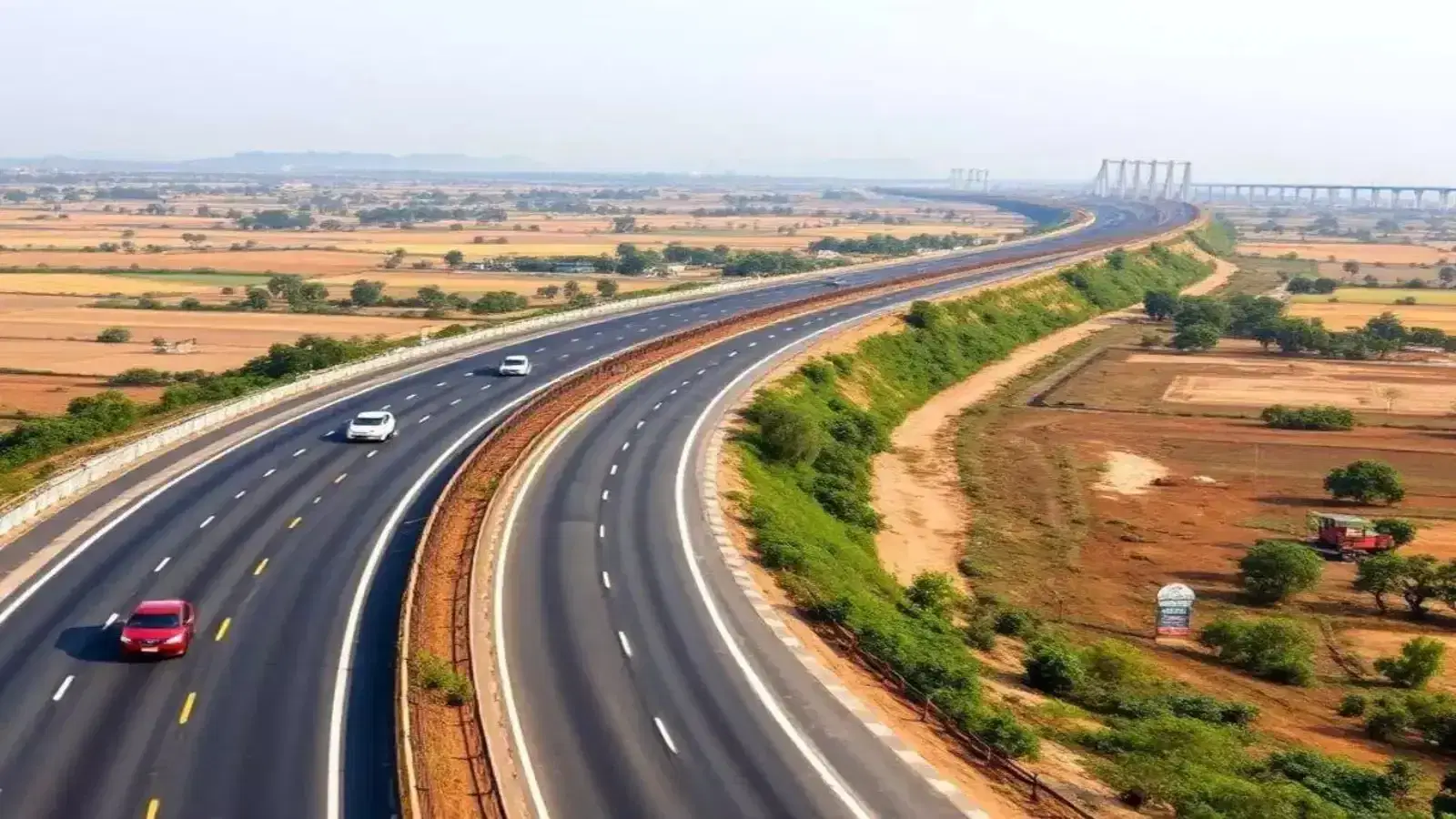
The Hindu Hrudaysamrat Balasaheb Thackeray Maharashtra Samruddhi Mahamarg is the obvious place to start. The expressway connects Mumbai and Nagpur, opened in phases from December 2022, and reached full completion on June 5, 2025, according to HomeBazaar's project tracking.
It has cut the Mumbai-Nagpur journey from roughly 16 hours to around 8 hours and directly connects 10 districts. Nagpur's MIHAN SEZ is also listed as a connection point near the route's eastern end.
MIHAN itself is another important part of the city's infrastructure story. The Multi-modal International Cargo Hub and Airport at Nagpur continues to support an aviation, logistics and IT-linked employment corridor in the southern part of the city. Several branded plotted developments are being positioned around this same corridor.
Nagpur Metro is moving ahead, but more slowly than planned.
Nagpur Metro Phase 2 is under construction. It covers four corridors, 43.8 kilometres and 32 stations, with RITES Ltd responsible for the design. The Maharashtra Cabinet approved the DPR in January 2019, while physical construction began in early 2024.
Progress has been slower than the original schedule suggested. By February 2026, 206 of the 1,466 required spans were complete, putting overall progress at about 14%, according to The Hitavada.
The original December 2027 completion target now looks unlikely. Metro officials and Asian Development Bank financing documents point towards 2028-29 instead.
There is also a noticeable difference between individual stretches. The Automotive Square-Kanhan corridor was 31.5% complete, while Khapri-Butibori stood at just 3.9%.
That distinction matters if you're assessing a purchase based on metro-led appreciation. The construction position on the specific corridor is more relevant than the older 2027 completion date that still appears in some coverage.
Which pockets actually make sense
The Nagpur end of the Samruddhi Mahamarg makes the southern and eastern approach roads worth watching, particularly where they connect with the expressway and MIHAN SEZ.
The Automotive Square-Kanhan Metro stretch has a nearer-term transit angle because construction is further along there. Land around the slower Khapri-Butibori corridor involves a longer wait for metro connectivity and therefore needs to be viewed on a different time horizon.
For a five-year investment case, that difference matters. A ten-year view may give the slower corridor more time to catch up.
What the growth numbers do and don't tell you.
Nagpur is part of the CII-Knight Frank basket showing 63% aggregate residential price growth from 2021 to 2026 and an 8% CAGR between 2016 and 2026.
Those are city-level figures. They are not returns for a particular plot or micro-market, and the source does not separately break out Nagpur's individual performance within the basket.
The figures are useful as an indication of the broader re-rating of tier-2 markets. They should not be treated as a projected return for a specific piece of land.
Nagpur-specific homework
Along with the usual RERA and title checks, buyers in Nagpur should verify a few additional points.
Check the project's RERA registration with the Maharashtra RERA authority. Where relevant, also confirm the layout approval against Nagpur Metropolitan Region Development Authority (NMRDA) records.
Actual location matters as much. Check the distance to Samruddhi Mahamarg access points and MIHAN yourself rather than relying solely on a developer's marketing map.
The same applies to metro-related claims. Identify the corridor closest to the land, then check its construction progress. The overall metro completion figure can give a very different impression from the progress on a particular stretch.
Land or flat, in this particular city
Nagpur's apartment market has benefited from the city's IT and logistics employment base. Plotted developments have a different proposition: direct title, generally lower holding costs and exposure to land values rather than a builder's construction schedule.
That distinction may matter in Nagpur because much of the city's future growth story is still tied to infrastructure under construction.
A five-year hold, realistically
A land purchase in Nagpur with a five-year horizon effectively depends on several things continuing to move in the right direction.
MIHAN needs to keep expanding its utilisation. Residential prices would need to maintain momentum broadly in line with Nagpur's position in the CII-Knight Frank basket. Metro Phase 2 would also need to make meaningful progress, particularly along the corridors that are already further ahead.
None of these outcomes is guaranteed. At the same time, Nagpur does not rely on just one project. Stronger MIHAN growth, for example, could continue even if the full metro network takes longer than expected. That gives a long-term land investor more than one infrastructure factor to consider.
What ₹55,000 Crore of expressway actually buys a landowner.
HomeBazaar puts the cost of the Samruddhi Mahamarg at ₹55,000 Crore. For a landowner near the route, that figure becomes relevant when the infrastructure changes who can realistically access the area.
The Mumbai-Nagpur journey has fallen from around 16 hours to about 8 hours. That can influence where logistics operators, businesses and even second-home buyers consider setting up or purchasing.
Infrastructure spending only matters to a landowner when it changes movement and demand around the land. In Nagpur's case, the Samruddhi Mahamarg has already moved beyond the proposal stage and is being used.
Nagpur next to its peers
Nagpur's growth story differs from cities where the investment case depends heavily on one sector or one major project.
Ayodhya, for example, has a strong tourism-led story, while it primarily drives some other tier-2 cities. Nagpur has several elements working alongside each other: logistics and cargo through MIHAN, a completed inter-state expressway, and a metro network still under construction.
That mix does not guarantee higher returns. It does mean more than one demand driver drives Nagpur's growth story.
HOABL's stake in Nagpur
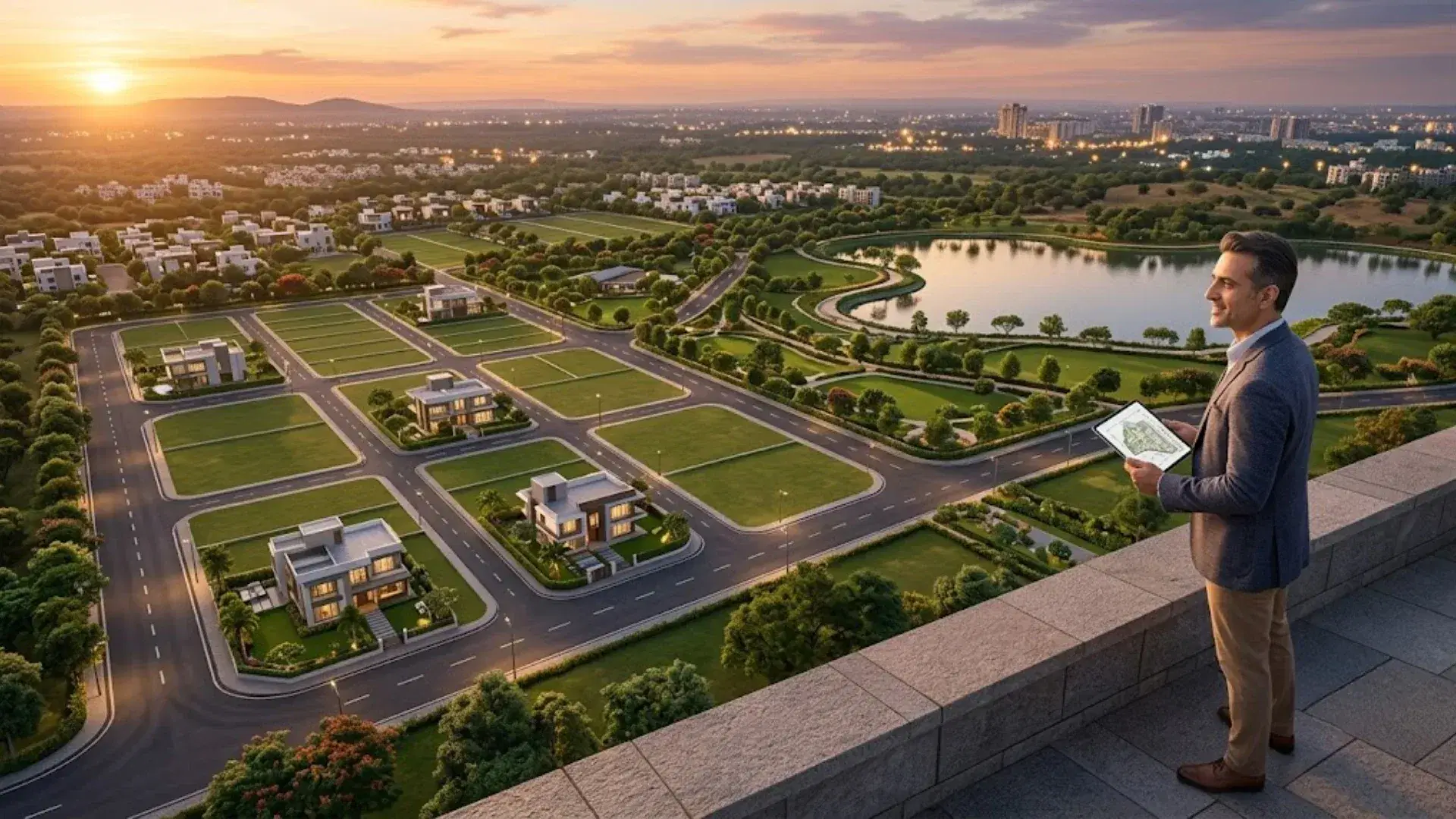
HOABL's Codename Nagpur N.O.W. is positioned alongside the Samruddhi Expressway and the New Nagpur IBFC. The project is planned as a waterfront plotted community with a sizeable clubhouse and amenity programme.
The first phase has sold out, while a new phase is currently under exploration.
For a prospective buyer, the key is to assess any new phase based on its own documentation. That includes checking its RERA registration, layout approval and actual access to Samruddhi Mahamarg and MIHAN. The performance or sales of the earlier phase should not replace those checks.
The employment story underneath the infrastructure
MIHAN's cargo, aviation, and IT-linked activity matters because it provides an employment base behind the infrastructure story.
That differs from a market where the main argument rests on a future transit line and the expectation that jobs and housing demand will follow later. Nagpur already has an operating employment generator in the southern part of the city.
That existing activity supports housing and land demand today, while the metro could add another layer of connectivity as construction progresses.
Bottom line
Nagpur already has several pieces of its infrastructure story in place: a completed expressway, an operating international cargo hub and SEZ at MIHAN, and a metro network under construction.
The metro is behind its original schedule, so any investment case should be based on what is actually built today rather than assuming the 2029 timeline will be met.
For a specific plot, the important checks remain its location, title, approvals, access to Samruddhi Mahamarg and MIHAN, and the progress of the nearest metro corridor.
FAQs
Is Nagpur a good city for land investment in 2026?
Nagpur has a substantial infrastructure base, including the completed 701-kilometre Samruddhi Mahamarg and the operational cargo hub and SEZ at MIHAN. The CII-Knight Frank report also records residential price growth for the city within its tier-2 market basket. Individual plots still need to be assessed on their own location, approvals and title.
When will Nagpur Metro Phase 2 actually be complete?
The original December 2027 target now looks unlikely. Metro officials and Asian Development Bank financing documents point towards 2028-29, while progress varies considerably between individual corridors.
What infrastructure should I check before buying land in Nagpur?
Check the actual distance to Samruddhi Mahamarg access points and MIHAN. If the investment case includes metro connectivity, identify the specific corridor closest to the land and check its current construction progress.
Is HOABL's Nagpur project available right now?
The first phase of Codename Nagpur N.O.W. is sold out. A new phase is under exploration. Any new phase should be checked separately for RERA registration, layout approval and actual access to the surrounding infrastructure.
Does Nagpur depend on a single infrastructure project to succeed?
No single project tells the whole story. MIHAN's employment base, the completed Samruddhi Mahamarg and the metro project each contribute separately. This means a delay in one project does not necessarily remove all of the city's other growth drivers.