What to Check Before Buying Land or a Plot in Nagpur: Complete Due-Diligence Guide
30 Sep 2026
Buying a plot of land or residential land requires a lot more due diligence than buying a ready-to-move house. As a buyer, you need to verify the ownership of the land, its classification, layout approval, permitted use and then verify the documents with the ground reality.
Nagpur real estate transactions for plotted developments often involve properties on the outskirts of the city. According to NMRDA, the Nagpur Metropolitan Region covers about 3,567 sq. km across 721 villages in nine tehsils.
1. Identify the Exact Plot and Underlying Land Parcel
Start with the basics. In most cases, it is helpful to first identify the basic identity of the property and ask for the Survey number, Gat/Sadhul number, Khasra number, Mouza or village name, Plot number, Total area, Dimensions, and the recorded Owner’s name.
Verification of these basic property details with details found in sale deeds, property records, sanctioned plans and other approvals is critical when comparing plots offered for sale in various locations throughout the city and metropolitan area. Plans and approvals can be assigned to different authorities depending upon location.
2. Verify the Seller's Title and Ownership History
Confirm the seller provided a clear title which can be transferred. A property lawyer would investigate the matter by examining the registered title documents and then follow the chain of ownership from previous owners to the seller.
Sale, gift or partition deeds, for example, together with documents to show how the property was inherited, and any relevant court orders can be examined. Additionally, a search can be made to identify any outstanding mortgages, disputes, acquisition notices and claims by co-owners.
Confirmation that the property is recorded in the current land register with the Seller’s name is not sufficient for a proper investigation of title.
3. Cross-Check the 7/12 Extract and Other Land Records
Verify the latest 7/12 extract, 8A extract, mutation and/or Ferfar entries, along with Property Card where applicable for relevant lands in Maharashtra. Verification of land records can now be done from digitally signed records on the Mahabhumi portal of the Maharashtra Government.
Revenue records confirm the survey number, recorded holder(s) and area of the land. Mutation entries in revenue records serve a fiscal purpose and do not by themselves create title.
It is wiser to match the Government records with the title documents registered with the Sub-Registry and to verify if there is any discrepancy.
4. Confirm Land Use, Zoning and NA Status
A plot marked on the ground does not mean it can be used for residential purposes.
Check which Development Plan, zoning and land-use classification applies to the plot in question. Check if Non-Agricultural permission is required for the intended use of land and has been granted, where applicable.
In the Nagpur Metropolitan Area, a substantial portion of the land is classified for agricultural use. In the planned city of Nagpur, NMC’s Town Planning Department would regulate land use for development. Land outside Nagpur city would be under the domain of NMRDA or another competent authority.
Verify the status of the land against the applicable land-use and planning records.
5. Verify the Sanctioned Layout
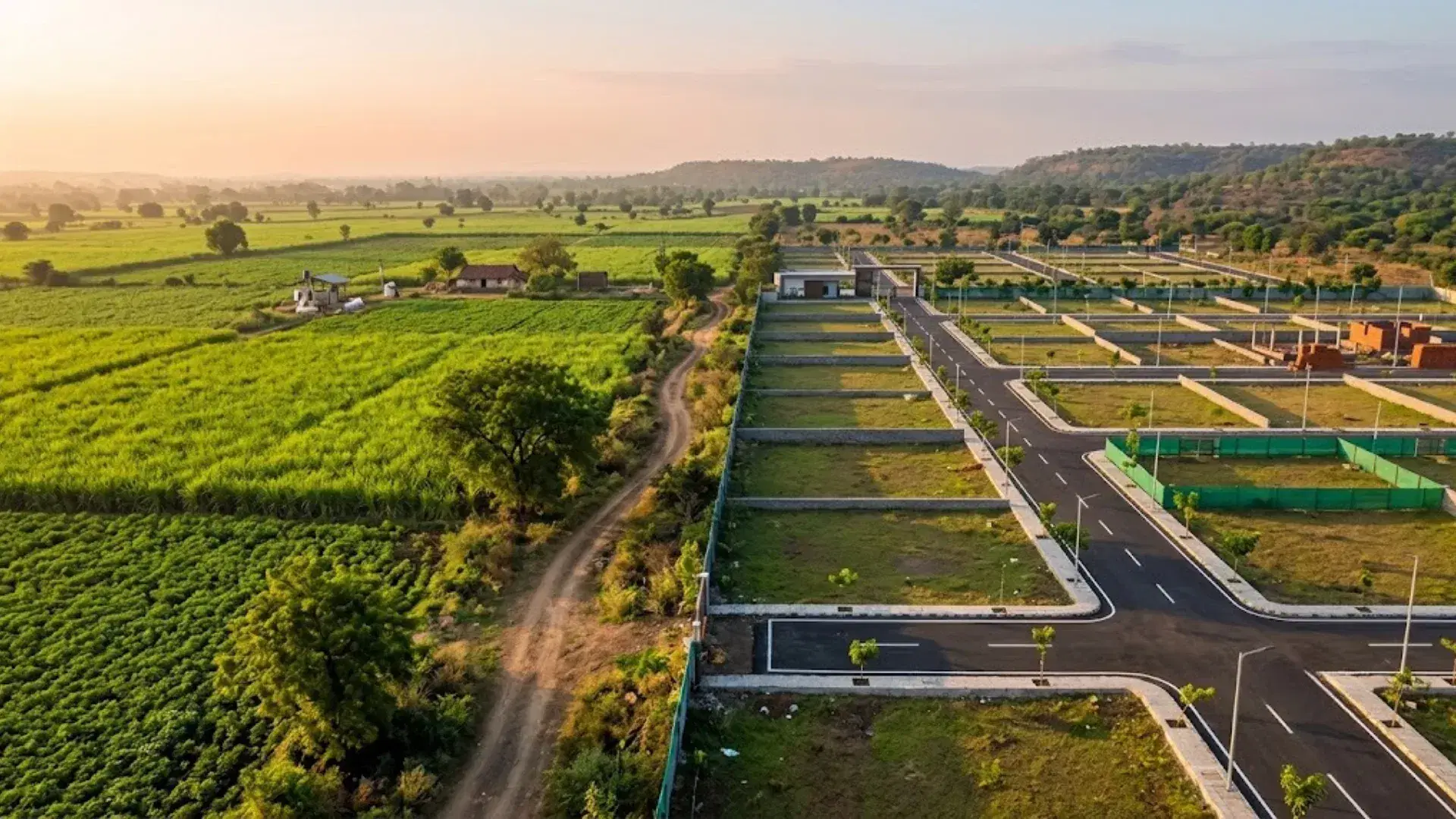
Land-use permission and layout approval are two separate approvals. If a property is a part of a plotted development, request the sanctioned layout for that development and verify if the exact plot offered is part of it. Check the plot number, dimensions, internal roads, open spaces, entry/exit points and any reserved areas, etc., and compare them with what you see on the site. Any deviation in the plot dimensions, location or access, etc. needs to be clarified before you part with a major sum of money.
6. Check MahaRERA Registration Where Applicable
Plot projects covered under the Real Estate (Regulation and Development) Act need to be verified for their MahaRERA registration. Verification of the project’s registration does not end with verifying the RERA number. Verify the promoter’s name, project’s location, survey details, sanctioned plans, intimated completion date, all approvals uploaded and also extension(s) or updates, if any.
An investor researching nagpur marina lodha will find that this is a 78-acre project offering plots starting from 116 sq. metres (1,250 sq. ft.) in Nagpur. The waterside development will feature an interconnected series of water features and a man-made beach. More than 40 amenities are planned for the development, which is being offered by HOABL Impactum Land Private Limited and is registered with MahaRERA under Registration No. PP1190002502095 for the Nagpur Marina project.
7. Check Access, Boundaries and the Plot on the Ground
Confirm the approach road, plot boundaries, dimensions, ground level, drainage and surrounding land use, and use a qualified surveyor to verify measurements where necessary. Importantly, check whether the plot has legal access from a public road. A road that appears to be okay to use on site may pass through private land or rely on access rights.
Look for any encroachments, high-tension lines, waterlogging, changes in ground level, etc. and observe any differences between the approved layout and the actual site.
8. Verify Infrastructure Claims Separately
It is also important to note that there is a difference between existing infrastructure, under-construction projects and announced projects that have not yet commenced. While a future road, a proposed metro corridor, or an airport-linked development may add value to a plot, the improvement in connectivity will only happen in the future. In such cases, check the current status of major announced projects from relevant Government departments against promoters’ advertisements. This will give you a better sense of current and future connectivity to your property.
9. Understand the Total Cost Before Booking
Be aware that the advertised price for a plot may not reflect the total amount payable. Obtain and verify a detailed written cost sheet that outlines the basic plot price and any additional charges such as development charges, amenity or infrastructure charges and other costs including maintenance deposits, taxes, stamp duty and registration. It would also be wise to verify if there are any outstanding land revenue, property tax and other dues on the property.
It makes sense to compare the total acquisition cost of plots offered for sale, including additional charges, rather than only their base price.
10. Review the Agreement Before Making a Major Payment
The Agreement should clearly set out the property which has been purchased and the promises made by the seller in respect of the purchase of that property. The Agreement should identify the plot number and size of the property, total consideration, payments, date of possession, terms for cancellation by either party and refund, responsibilities for maintenance of the property and use of common areas.
Ensure that all commitments made with respect to important roads, amenities and other project features are included in the agreement. Also verify the authority contained in a Power of Attorney issued by a seller or their representative to ensure that such seller or representative is able to enter into the Agreement to Purchase.
A Final Checklist Before You Buy a Plot in Nagpur
Before you go ahead with your buying decision, you must be able to provide answers to the following:
- Who is the legal owner of the land?
- Does the title and land document tally with each other?
- Is the intended use of land allowed?
- Is the NA permission required and obtainable?
- Is the layout permitted by the appropriate authority?
- Is the actual plot included in the approved layout?
- Is MahaRERA registration required and confirmed?
- Are there any mortgages, disputes or acquisition problems?
- Does the physical land tally with the documents on paper?
- Is there road access in a legal manner?
- Are the infrastructure claims substantiated?
- Have all mandatory payments been made known?
Conclusion
Buying Nagpur plots should not be based only on a property’s location, price or future growth prospects. Instead, check if all title documents, revenue documents, land usage, sanctioned plan, RERA registration, agreement and site are in sync with each other.
Looking at all these records together will help to identify any inconsistencies. For major purchases on the land front, it is wise to instruct an independent property lawyer to check the title and the agreement, and also to bring in someone with the relevant qualifications such as a surveyor or a planning professional to check the measurement of the plot and the compliance with the sanctioned plans.
FAQs
What documents should I check before buying a plot in Nagpur?
Important documents to verify ownership rights include registered title deeds (including previous owner(s) names), 7/12 extract / Property Card, mutation entries, relevant NA documents, sanctioned layout, land-use / zoning documents and MahaRERA registration/disclosure documents (as the case may be). The exact list of documents depends on the property's location and legal status.
Is a 7/12 extract enough to prove ownership of land in Nagpur?
No. A 7/12 extract is an important revenue record showing the recorded holder and other land details. However, it should be verified against registered title documents and the ownership history before purchasing the property.
How can I check whether a plot in Nagpur has proper development approval?
For verification of a particular property, first identify the competent authority for the said location. Verify the sanctioned plan, land use and NA permissions applicable for the said property. Verify the plot number in the document with the records available with the competent authority. For a plotted development covered under RERA, verify MahaRERA registration and project disclosures published by the developer in respect of the said project independently.