Land Registry Explained: The Step That Truly Protects Your Investment
27 May 2026

The land registry is the legal process that establishes ownership of a property in India. It ensures your investment is enforceable, transferable, and protected. Without a proper land registry, ownership remains unclear, affecting resale value and long-term returns. Understanding the land registry process helps investors secure their assets, minimise legal risks, and build confidence in property transactions.
For many HNIs and NRIs, buying land in India is not just a transaction. It is a long-term investment decision, often tied to future homes, legacy planning, or wealth creation. The real strength of any land investment lies in more than the location or appreciation potential. Land registry is equally important.
The land registry is what converts your purchase into legally recognised ownership. It is the moment where your intent becomes an enforceable reality. Without it, even a fully paid plot remains uncertain in legal terms, which directly affects long-term returns and resale confidence.
Land registry is the process of recording a property transaction with the government, establishing clear and enforceable ownership rights under the Registration Act, 1908.
Why is Land Registry Critical for Long-Term Returns?
Land is the base layer on which everything else stands. If this foundation is unclear, every future decision becomes uncertain.
1. Without a proper land registry:
- Ownership is not legally enforceable
- Future buyers may hesitate
- Financial and legal processes become difficult
2. Once ownership is formally recorded:
- Rights are clearly defined and protected
- The land becomes a transferable asset
- Buyers engage with greater confidence
3. This directly shapes your investment outcome:
- Better liquidity when you decide to sell
- Stronger perception of value
- More predictable long-term returns
How Does Land Registry Convert a Transaction into Ownership?
A common assumption is that payment completes ownership. In reality, ownership is recognised only after the land registry.
A land transaction becomes complete through:
- Execution of a sale deed between the buyer and seller
- Payment of stamp duty as per state norms
- Registration with the local sub-registrar
Until this process is completed, the transaction remains incomplete in legal terms.
How to Do the Registry of Land in India for a Secure Investment?
Understanding how to do a registry of land helps you stay in control of your investment.
The process typically involves:
1. Verifying the Land Title
- Checking ownership history
- Reviewing any legal liabilities
2. Preparing the Sale Deed
- Documenting the terms of transfer
3. Paying Stamp Duty and Fees
- As per applicable state regulations
4. Registration at Sub-Registrar Office
- Either in person or through authorised representation
5. Final Documentation
- Receiving the registered sale deed as proof of ownership
Land Registry Process at a Glance
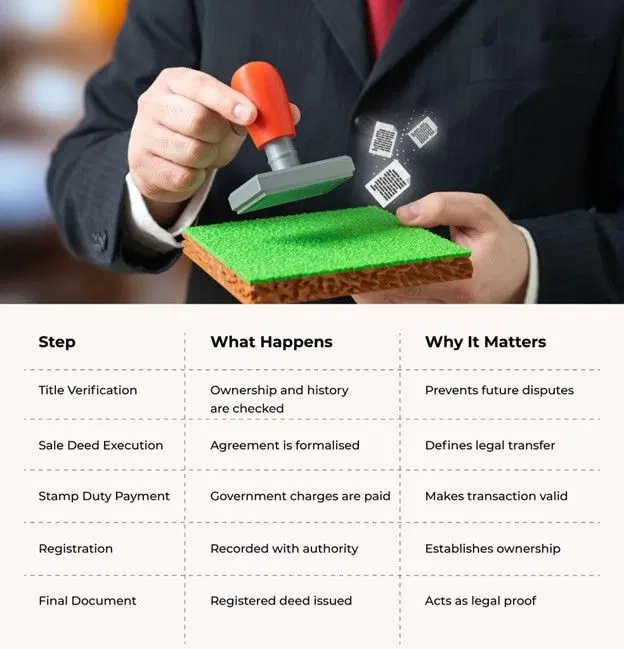
Each step may appear procedural, but together they define whether your ownership is clear and defensible.
What Should NRIs Know About Land Registry?
For NRIs, the process carries additional layers that need careful handling.
Key aspects include:
- Compliance with FEMA guidelines under the Foreign Exchange Management Act, 1999
- Power of Attorney, if the buyer cannot be physically present
- Correct documentation for taxation and repatriation
Handled correctly at the registration stage, these ensure smooth ownership and future transactions, protecting both investment value and long-term returns.
Why is Title History Important Before Registration?
Before registration, it is important to understand what has come before. Land carries a history, and every transaction leaves a trace.
Important records to review:
- Encumbrance certificate, which shows existing liabilities if any
- Chain of title, which tracks past ownership
- Mutation records, which reflect updates in local records
If there are gaps in this history, they do not disappear after purchase. They become part of your ownership and can influence your long-term returns.
How Does Land Registry Impact Resale Value?
This clarity becomes most visible when the asset is brought back to the market. At the time of resale, the quality of your documentation becomes immediately evident:
- Transactions move faster
- Buyers engage with greater clarity
- Negotiations remain more stable
Impact of Land Registry on Investment Outcomes
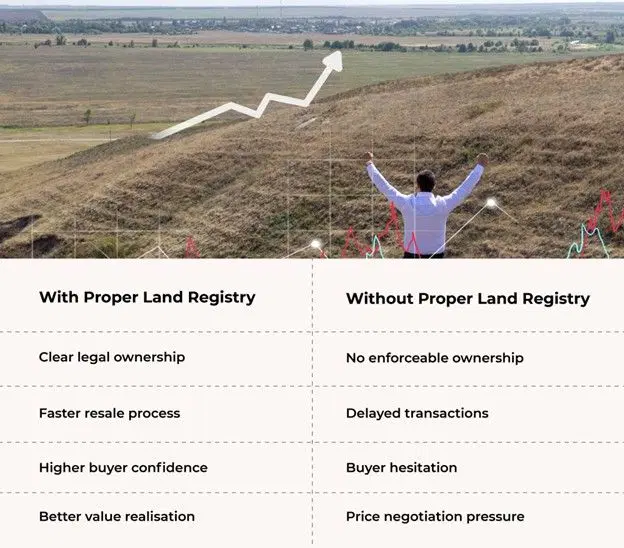
In practical terms, your resale experience is shaped by how clear and verifiable your ownership records are. As highlighted by the SC (Supreme Court), clear title and registration are critical for transaction speed and buyer confidence.
How Structured Developments Simplify the Process
For individual buyers, verifying every layer of land documentation can be time-consuming.
This is where structured developments bring value.
The House of Abhinandan Lodha® focuses on:
- Pre-verifying the chain of title
- Ensuring legal clarity before offering plots
- Supporting buyers through the registration process
This allows buyers to focus on the investment, knowing that the legal groundwork has been carefully handled to support strong long-term returns.
What is the Biggest Misunderstanding About Land Registry?
A common belief is that registration is just a final step. In reality, it is the most defining step.
Payment confirms intent, land registry confirms ownership. Without a land registry, the investment remains incomplete from a legal standpoint.
Conclusion
Land registry is not a formality. It is the foundation of your land investment. It determines whether your ownership is secure, whether your asset can be easily sold, and whether your long-term returns can truly materialise. For HNI and NRI investors, getting this step right ensures that the investment stands on solid ground, both legally and practically.
Projects by The House of Abhinandan Lodha® are designed to support this through structured processes and legally sound documentation, helping you maximise your long-term returns on every investment.
FAQs
Q1. What is the land registry?
Land registry is the process of officially recording property ownership with the government, making it legally valid and enforceable.
Q2. How to do the registry of land in India?
It involves verifying the title, preparing a sale deed, paying stamp duty, and registering the document at the sub-registrar’s office.
Q3. Why is the land registry important for investment?
It ensures legal ownership, improves resale potential, and supports strong long-term returns on your investment.
Q4. Can I sell land without registration?
Unregistered land is difficult to sell, as buyers require clear legal ownership before proceeding.
Q5. What should NRIs keep in mind during the land registry process?
NRIs should ensure compliance with FEMA guidelines, proper documentation, and authorised representation if needed.
Q6. Does the land registry affect resale value?
Yes, a clear and complete land registry improves buyer confidence and helps achieve better value during resale.