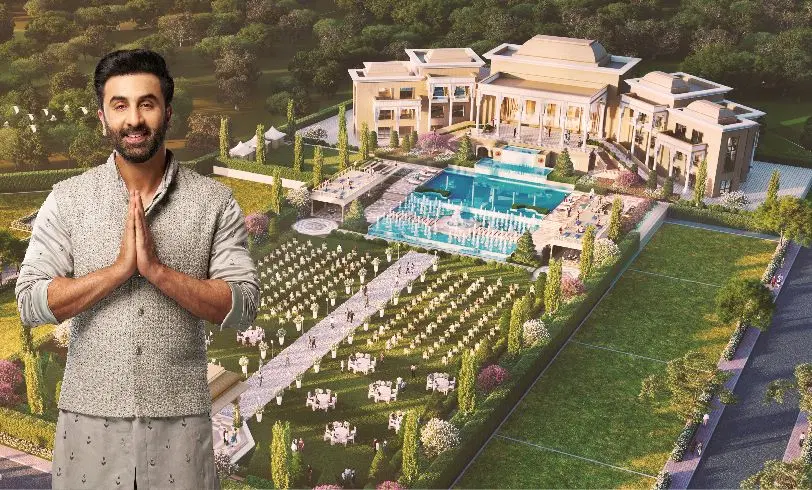
Ranbir Kapoor Buys in Ayodhya: What It Signals for Plot Investors in 2026
12 Aug 2026
Bollywood actor Ranbir Kapoor recently purchased a 2,134 sq. ft. plot in Ayodhya for approximately ₹3.31 crore. The land forms part of The Sarayu, a 75-acre plotted development by The House of Abhinandan Lodha® located along the Sarayu River.
However, Ranbir Kapoor’s purchase should not be treated as investment advice. It is better understood as a proof point showing that Ayodhya is attracting interest from high-net-worth buyers who are evaluating the city through more than a religious or emotional lens.
Airport connectivity, railway redevelopment, road infrastructure, tourism growth, hospitality expansion and planned urban development are gradually changing the city’s economic profile. For investors considering an Ayodhya real estate investment in 2026, these underlying factors matter more than any celebrity headline.
Ranbir Kapoor’s Ayodhya Investment: The Facts
Ranbir Kapoor’s reported purchase was announced in May 2026. The transaction involved:
- A plot measuring approximately 2,134 sq. ft.
- A reported purchase value of around ₹3.31 crore
- A location within The Sarayu in Ayodhya
- A broader 75-acre plotted development
- Access to planned lifestyle amenities and hospitality infrastructure The development is located along the Sarayu River and includes a clubhouse, curated amenities and a luxury hospitality component associated with The Leela.
Ayodhya is no longer being considered only as a pilgrimage destination. It is increasingly being evaluated as a location where spiritual significance, tourism, infrastructure and professionally planned real estate are beginning to converge.
Infrastructure Development Is Changing Regional Access
One of the most important developments has been the opening of Maharishi Valmiki International Airport, Ayodhyadham.
Phase 1 of the airport was developed at a cost exceeding ₹1,450 crore. Its terminal covers approximately 6,500 sq. metres and was designed to handle around 10 lakh passengers annually.
Rail connectivity has developed alongside the airport. Phase 1 of the redeveloped Ayodhya Dham Junction Railway Station was completed at a cost exceeding ₹240 crore. Railway doubling and electrification projects have also been undertaken to strengthen connectivity across the wider region.
Road improvements include the redevelopment of Rampath, Bhaktipath, Dharampath and Shri Ram Janmabhoomi Path. Other works have involved airport connectivity, bypass development, national highway upgrades, parking facilities and supporting civic infrastructure.
Tourism Is Reshaping Ayodhya’s Economy
The city reportedly recorded approximately 23 crore visitors between January and June 2025. This followed a sharp increase in visitor activity around the development and opening of the Ram Mandir.
This wider tourism ecosystem may be important for Ayodhya land appreciation, but investors must still evaluate individual micro-markets. A city can experience strong tourism growth without every nearby plot benefiting equally.
Distance from major roads, land-use permissions, neighbourhood development, project planning and actual buyer demand will continue to matter.
Planned Urban Development Is Widening the Market
Ayodhya’s future growth is not expected to remain restricted to the temple precinct.
The city’s planning framework includes residential, commercial, public and tourism-oriented development across a wider planning area. A large greenfield township has also been planned to support future expansion.
The foundation stone for a greenfield township costing more than ₹2,180 crore was laid as part of a broader infrastructure programme for Ayodhya. Other initiatives have included residential schemes, road upgrades, riverfront improvements and tourism facilities.
For buyers considering investing in Ayodhya plots, the question should therefore not be limited to how close the land is to the Ram Mandir.
They should also study:
- Road and highway access
- Distance from the airport and railway station
- Approved land use
- Nearby planned development
- Availability of utilities
- Project infrastructure
- Long-term usability
- Future buyer demand
What Does Ranbir Kapoor’s Purchase Actually Signal?
Ranbir Kapoor’s purchase does not prove that Ayodhya land prices will rise by a particular percentage. It also does not mean that investors should immediately enter the market.
What it may signal is that Ayodhya is beginning to attract buyers with the financial capacity to evaluate premium, long-term land ownership.
This matters for three reasons.
1. Ayodhya Is Entering the Premium Land Conversation
Premium plotted developments, curated amenities and luxury hospitality are introducing a new category of ownership.
2. Buyers Are Looking Beyond Immediate Use
Some investors may not intend to construct or resell immediately. Their purchase may be linked to legacy, long-term ownership or participation in the city’s future growth.
3. Organised Developments Are Attracting Greater Attention
Affluent and NRI buyers may prefer projects where the layout, documentation, infrastructure, ownership process and customer communication are handled more professionally.
What Plot Investors Should Learn from Celebrity Investments
1. Location Fundamentals
The plot should have clear access and a practical connection to the city’s growth corridors. Buyers should verify actual travel time rather than depending only on promotional distance claims.
2. Legal Clarity
Title records, ownership history, encumbrances, approved layouts, land use and registration details should be checked independently.
3. Developer Credibility
The developer’s track record, project disclosures, development standards and customer communication process should be reviewed.
4. Infrastructure Status
Investors should distinguish between operational infrastructure, work under construction and projects that are only proposed.
5. Investment Horizon
Land generally requires patience. Buyers expecting an immediate resale may find that the market takes longer to develop than anticipated.
Is 2026 Still a Good Time to Consider Ayodhya?
There is no universal answer.
Ayodhya has already received substantial attention, and some locations may have experienced significant price movement. Investors should therefore avoid assuming that every available plot represents an early-entry opportunity.
At the same time, the city’s development cycle is still progressing. Airport expansion, urban development, hospitality growth, tourism infrastructure and planned real estate continue to shape the market.
An Ayodhya plot investment in 2026 may be more suitable for buyers with a medium- to long-term horizon than for people seeking a quick resale.
The better question is not whether Ayodhya is “early” or “late.” It is whether the price, location and project remain justified by their future demand potential.
Why Branded Land Developments Matter in Emerging Markets
Emerging land markets often have fragmented information. Buyers may find it difficult to compare ownership records, infrastructure commitments, layouts and development timelines across standalone plots.
The Sarayu by The House of Abhinandan Lodha® is a RERA-registered plotted development in Ayodhya. According to the official project page, it is located along the Sarayu River, just off NH-27, and includes approximately 40 curated amenities and a 30,000 sq. ft. clubhouse.
The project represents HOABL’s broader approach of identifying destinations where cultural importance, tourism, infrastructure and long-term lifestyle aspirations intersect.
HOABL’s perspective is that informed land investment should be based on research, documentation, planned development and patience rather than market noise. Ranbir Kapoor’s purchase brings visibility to this approach, but buyers must still assess whether the opportunity matches their own goals.
Conclusion
Ranbir Kapoor’s Ayodhya investment has drawn attention to the city’s premium plotted development market. However, the purchase is better viewed as confirmation of a larger shift than as the main reason to invest.
Ayodhya’s transformation is being driven by airport and railway connectivity, road improvements, urban development, tourism growth and the expansion of organised hospitality and real estate.
The real lesson from Ranbir Kapoor’s investment is not to follow the celebrity. It is to understand why Ayodhya is being evaluated differently today and whether its long-term transformation aligns with the investor’s personal objectives.
FAQs
1. How much did Ranbir Kapoor invest in Ayodhya?
Ranbir Kapoor reportedly purchased a 2,134 sq. ft. plot for approximately ₹3.31 crore at The Sarayu, a plotted development by The House of Abhinandan Lodha® in Ayodhya. The transaction was reported in May 2026.
2. Is Ayodhya a good location for real estate investment in 2026?
Ayodhya is receiving attention due to tourism growth, airport and railway connectivity, road development and planned urban expansion. However, the suitability of an investment depends on the plot location, price, legal documentation, project quality and the buyer’s intended holding period.
3. What should buyers check before investing in Ayodhya plots?
Buyers should verify title documents, RERA registration where applicable, approved layouts, land use, road access, project infrastructure, development timelines, pricing, transfer terms and future demand potential.
Disclaimer: Land appreciation depends on infrastructure execution, regulatory conditions, project development, buyer demand and broader market conditions. Celebrity transactions and historical price movements do not guarantee future returns. Buyers should complete independent legal and financial due diligence before investing.