Legacy Real Estate Investment and Branded Land Projects: A Guide for Long-Term Investors
21 Oct 2026
For many families, land is a long-term proposition and something they consider in terms of decades rather than years. Families often think about inheritance and view a property passed down from generation to generation as something that can be handed down again or used by the immediate family.
Legacy real estate investment focuses on the idea of families keeping, using, and then passing down property to subsequent generations over the course of several decades. Many branded land projects are now attracting investors who see land as a long-term family asset as opposed to a quick profit-making investment opportunity. This guide outlines what legacy real estate investment is, how branded land projects can play a part and what to look out for when buying.
What Is Legacy Real Estate Investment?
Legacy real estate investment refers to holding property for multiple generations of a family. In terms of realising returns, more weight can be placed on long-term capital gains as well as potential use by subsequent family generations than on short-term gains in terms of rental income or near-term capital appreciation. The property can be worth much more in 20-30 years than it is today.
The clearest way to understand it is to set it beside short-term property investing, where the plan is usually to buy, wait for a price jump and exit.
There is nothing wrong with short-term property investing. However, legacy real estate investment is very different and is best suited for people who are different from short-term property investors. A legacy investor who speculates like most investors on new launches and then sells on the first rise is not creating any lasting value.
Core Principles of Legacy Real Estate Investing
A generational horizon. Rather than focusing on short-term returns within five years, view the property from the perspective of your children and their children. Yes, its value may rise slowly and can drop from time to time, but the way you look at the investment needs to change too.
Assets that are hard to replace. A well-planned plot of land, a waterfront plot or a plot in a well-conceived community project are assets which cannot easily be reproduced. The limited supply of such assets is part of their enduring appeal.
Risk control: Many long-term investors will not put all of their funds into a single plot of land or location. However, borrowing against land should remain at a level the buyer can repay over the long term while still covering unexpected expenses. In addition, some cash should be held in liquid investments to prevent the seller from having to sell the land at an undesirable time. Additionally, all of the relevant papers and documentation should be in order to avoid any potential title problems that could remain attached to a property for years to come and then become a problem for the next owner.
Estate and succession planning. When you own property, it is only half the job of effectively managing your asset. The rest of the job is passing it down to future generations safely. The best way to do this is with a clear Will, proper nominations and up-to-date documentation. This requires a lawyer, and ideally this should be done prior to a purchase, not after.
Passive, sustainable transfer. A plot of land does not require the same day-to-day management as a rental property. The intention is for the asset to increase in value over time and then be passed on to the next generation of family members without them having to get involved in managing a business.
Understanding Branded Land Projects
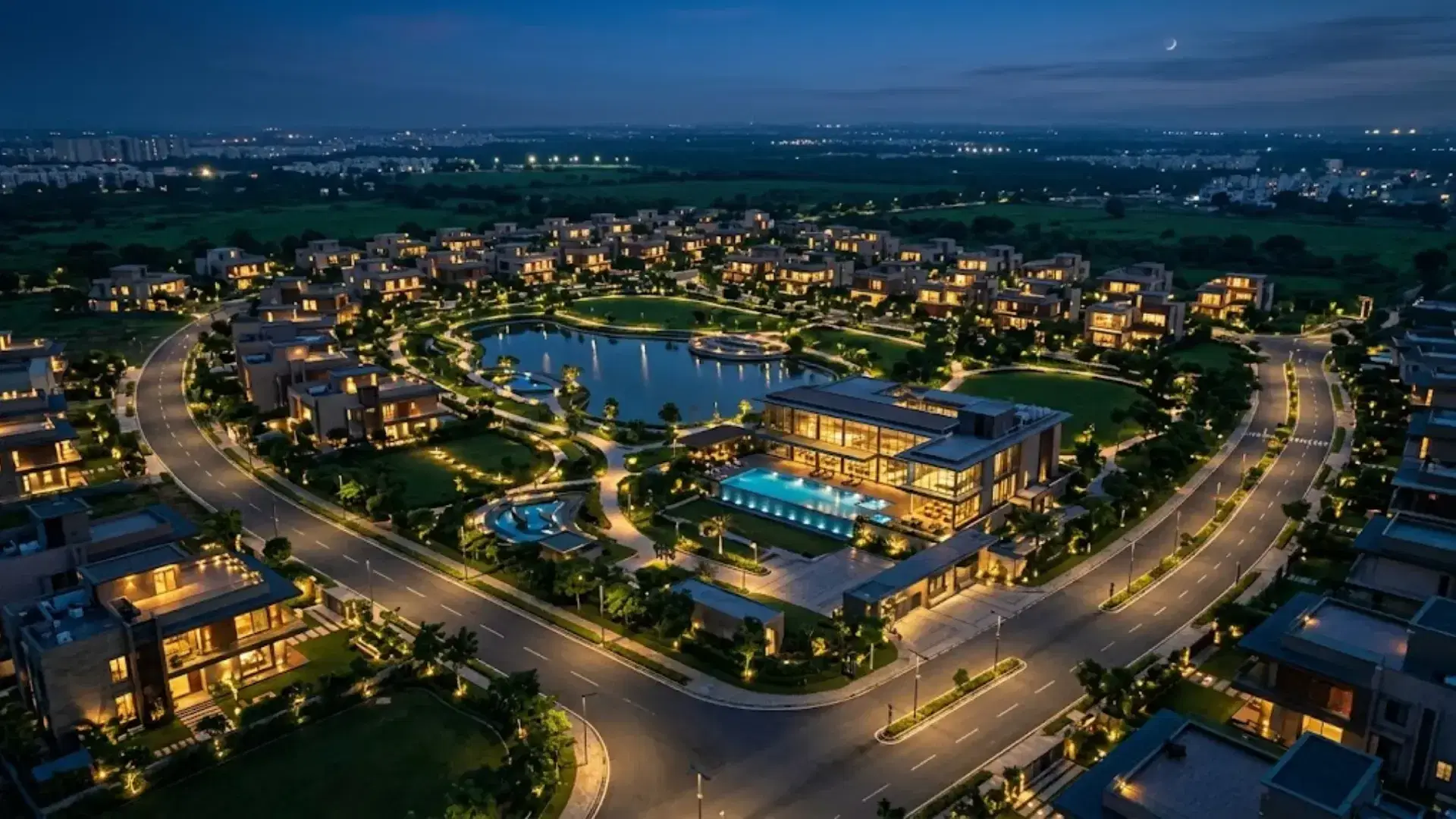
A branded land project is typically a plotted development in which plots or land parcels are sold under an established brand, often associated with luxury, hospitality or a particular lifestyle. The brand name may signal the developer’s intended standards, but buyers should verify the project’s design, infrastructure, maintenance plans and promised amenities.
A master plan typically outlines the project’s layout, including internal roads and planned infrastructure such as drainage, electricity and water connections. A number of projects also feature clubhouses, parks and facilities for wellness. These projects command a premium over similar unbranded plots in the same area. However, this premium is only fair if the project is well implemented and maintained. Therefore, it is best to approach such projects with a critical rather than blindly positive approach.
In India, many branded land projects are plotted developments where buyers purchase plots in a planned layout. The House of Abhinandan Lodha (HOABL) is one developer that operates in this segment.
How Branded Land Projects Align With Legacy Investment Goals
When all is said and done, several factors contribute to the ‘fit’ between branded land and legacy uses. Brand recognition may provide greater accountability because the developer has a public reputation to maintain. Clearly, there is always the possibility for things to go wrong and for due care and attention not to have been shown. However, such a developer would undoubtedly have far more to lose than their lesser-known counterparts. So, yes, it is vital to read the small print but, fundamentally, different people are accountable.
As opposed to a number of scattered plots of land, a planned community will typically mature at a different pace. In many cases, the roads, utilities and amenities may be designed and managed by the same entity that sells the plots of land, helping maintain the surroundings of individual plots over time. In terms of long-term appreciation, a well-managed development may appreciate steadily, depending on factors such as location and the continued quality of development.
Branded land can be suited to two specific types of legacy uses. The first would be land banking for the investor, who buys and holds a plot or plots of land over the long term before developing them. The second type of user would be the family who wants to hold a second home or even a family retreat, comprising a cluster of plots of land, which can be built upon by family members over time to create their own family compound.
Benefits of Investing in Branded Land for Legacy Portfolios
Brand premium. The plots in the branded projects are often sold for a higher price than similar plots of land outside the projects. On resale, these plots may attract buyer interest, but demand and resale value depend on market conditions and the project’s performance. The brand premium may diminish if the brand or project fails to meet expectations.
It may protect against inflation. Because land is limited in supply and development costs can increase over time, its value may keep pace with inflation over the long term, although this is not guaranteed.
Clearer title. A reputable developer should be able to provide evidence of land title, applicable approvals and project registration before sale. Obviously, this does not mean that all title matters are automatically okay, but rather that the document history is more transparent than with an individual vendor and certainly something that can be checked and verified with the aid of lawyers.
Professionally managed infrastructure. The roads, drainage and community facilities are managed by the project’s management company. This means that families who live elsewhere in the world can rest assured that someone is looking after matters on their behalf.
Appeal to the next generation. Land held within well-managed communities is far more likely to be retained by younger family members and developed/improved over time than a parcel of isolated land which each family member feels they have to monitor. It is an asset that the family actually wants to hold.
Risks and Considerations for Legacy Investors
First, consider what you’re buying: the plot of land itself, and compare it with other similar plots for sale elsewhere in the area. Consider what premium the brand name of the developer is adding to the cost of the land, and verify whether this will translate into a higher resale price for similar properties in the area.
Another important risk consideration for the investor is that of brand reputation. The developer’s reputation may suffer if the promised amenities are not delivered or if key milestones are missed. To ensure that the investor has a true understanding of what the developer is capable of delivering, one should look at what they have actually completed, visit other projects by the developer to see how they have been maintained, and speak with current owners and read feedback from them to gain insight into the latest launches by the developer.
Thirdly, liquidity. Land generally takes longer to liquidate than shares or even most apartments, and a premium plot typically has a restricted number of potential buyers. In the case of a legacy investor who never intends to sell, this point is of little relevance, but a family who purchases the land with the intention of passing it down to future generations and who may require cash at short notice will find this a major issue.
Brand name alone is not enough to confirm that all is well. Check the RERA registration, the approved plan, and the land usage certificate(s). Get your own lawyer to verify the title and then read the agreement to confirm the promised amenities, the maintenance charges, etc., and the transfer process. This would apply to any land purchase from any developer.
Examples of Branded Land Projects and Legacy Property Types
Luxury hospitality-branded residences provide another example of how branding can influence a property's appeal, although they differ from plotted land developments. Typically, these are completed residences designed to deliver a particular experience of design, of service and indeed of stay. Ritz-Carlton Residences and Four Seasons Private Estates are two examples of brands that deliver a particular promise of quality and are worth a look to see how the brand name adds value.
The same thing can be done with a legacy property that doesn’t carry a famous brand. A family can create a compound wherein in-laws, siblings, etc., can buy plots next to each other and build one after the other. A waterfront property is also a long-term buyer’s property as there is limited usable shoreline. Even a well-located plotted development in a planned project can be a good legacy asset if the family intends to hold it for a second home or for future use.
In India, developers such as HOABL offer branded plotted developments focused on land ownership. So research each project in detail and compare what’s actually included for you in black and white against the hype around the brand name of the project.
Planning the Next Step
It is not recommended that a buyer looking to sell in a few years purchase a legacy property. However, in terms of planning for the needs of your family over the years, a branded property with a well-planned layout would be suitable, provided the infrastructure and maintenance are in place. Yes, the property may cost more, but you need to consider whether the premium is justified by its intended long-term use and the benefits offered.
Investigate the developer, title, approvals, etc., as you would for any other property purchase, and consider taking advice from a property lawyer and a financial adviser, particularly if it is part of a larger succession or estate plan.
FAQs
What is legacy real estate investment?
This is a long-term approach to property that aims to preserve wealth and pass assets from one generation to the next, rather than focusing on short-term speculation.
What is a branded land project?
A specific project development where land plots are branded under a project and are sold with a master plan, plotted infrastructure and amenities that are managed and developed over time by the project promoters. Typically, such projects command a premium over other similar projects due to the brand value and promise of development and facilities that the brand name carries.
Are branded land projects a safe investment?
Even the best investments are not risk-free. Although branded projects may offer clearer documentation and managed infrastructure, they are normally more expensive than comparable unbranded plots. Moreover, one has to consider the high price one has to pay for a brand and also the longer period one has to wait before being able to resell. Before signing any agreement, always verify RERA registration, all necessary approvals and the clear title.
Is land a good asset to pass on to the next generation?
While there is always some risk to any investment, provided the title is clean and the location is likely to be of use over the longer term, then yes, it can make sense as a means to pass on wealth to future generations of a family. Clearly, however, some thought needs to be given to the process of transferring assets to heirs in order to minimise conflict, and this would include making a Will and keeping records up to date.