Mumbai’s Land Scarcity: Why Buyers Are Looking Beyond the City Core
29 Sep 2026
The City of Mumbai has always had a complicated relationship with land. With a huge population and intense commercial activity, it is one of the most challenging locations, and with very little land available for development, most new residential stock is being created through redevelopment of already occupied land.
Knight Frank, in their 2025 report on redevelopment across India, highlights Mumbai as one of the country’s most land-constrained property locations. Over 70% of the land within the MCGM area is already developed, and at a high population density of over 30,600 people per sq. km [1].
Some real estate seekers are looking for larger areas of land in the Mumbai Metropolitan Region (MMR) to build or park their existing stock of real estate. Certain localised areas in the fringe areas of MMR, like Navi Mumbai, Raigad and the eastern part of MMR, are coming into focus due to specific types of properties that cannot be developed in Mumbai due to its high density.
Why Land Availability Is Structurally Limited Within Mumbai
The constraints on land in Mumbai are not confined to the current demand for property. Most of the city has already been developed, and the remaining land mass is finely balanced between the uses of existing development, major infrastructure, commercial activities and reservations.
This is visible in the way Mumbai is creating new housing today:
- Mumbai’s land is already largely developed, with over 70% of MCGM’s land being already built up [1].
- 910 housing societies have entered into redevelopment agreements between 2020 and May 2025 to unlock around 326.8 acres of development land [1].
- More than 44,000 homes could be built from existing society redevelopment projects to meet housing demand by 2030 [1].
Mumbai's Property Geography Is Expanding Beyond the City Core
The land area of Greater Mumbai (Municipality) as recorded by MMRDA is approximately 437 sq. km [2]. The larger Mumbai Metropolitan Region covers approximately 6,328 sq. km and includes Navi Mumbai / Panvel, Karjat / Khopoli, Alibaug and other urban centres [2].
When you’re searching for land for sale in Mumbai, you need to think of the wider geography. You don’t have to stop searching at the municipal boundary. Ownership of land, as opposed to ownership of an apartment in the city, may mean you have to look elsewhere.
Infrastructure Is Making the Wider MMR More Accessible
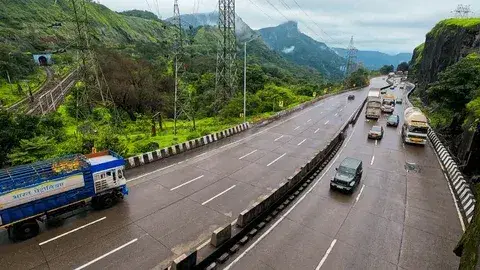
The wider MMR has become more connected as major roads, airports and rail corridors are being developed or upgraded.
Several major projects are influencing this shift:
- Atal Setu: Connecting Sewri to Nhava Sheva (21.8-km Mumbai Trans Harbour Link) [3].
- Navi Mumbai International Airport: The airport commenced commercial operations in December 2025, strengthening air connectivity on the eastern side of the MMR and the wider Navi Mumbai–Raigad region.
- Panvel-Karjat rail region: The Panvel-Karjat suburban railway project is expected to improve connectivity between the Panvel and Karjat areas and strengthen links between Navi Mumbai and the wider MMR.
Building infrastructure does not mean all locations outside of Mumbai are now equally good to buy. However, the range of locations that can be looked at while still being part of the metropolitan area is significantly enhanced.
The practical route of travel and access to the nearest station, expressway, airport or major road would likely end up being a greater factor in choosing a property than kilometres on a map to South Mumbai.
Why Planned Land Is Becoming Relevant Outside Mumbai
A plotted development may provide:
- Clearly demarcated individual plots
- Internal roads and planned access
- Drainage and utility infrastructure
- Common landscaped or recreational areas
- A defined development layout
- Project-level approvals and documentation, where applicable
For example, the larger Mumbai Metropolitan Region (MMR) planning context for Matheran/Neral was outlined by MMRDA within the broader metropolitan context, and Neral has become a recent interest within the Mumbai-region property market given its rail connectivity, proximity to the scenic Matheran hills and connection to the Karjat-Panvel side of the region.
For prospective buyers interested in purchasing open space in Mumbai, the guide to Neral vs Karjat for plots near Mumbai helps to better understand each of the adjacent property markets and their varying characteristics.
How HoABL Is Bringing Planned Land to the Mumbai Region
A developer outside of Mumbai has much larger amounts of land at their disposal. Thus, they are able to create options for residential plots that would not be feasible within the densely built-up environment of Mumbai.
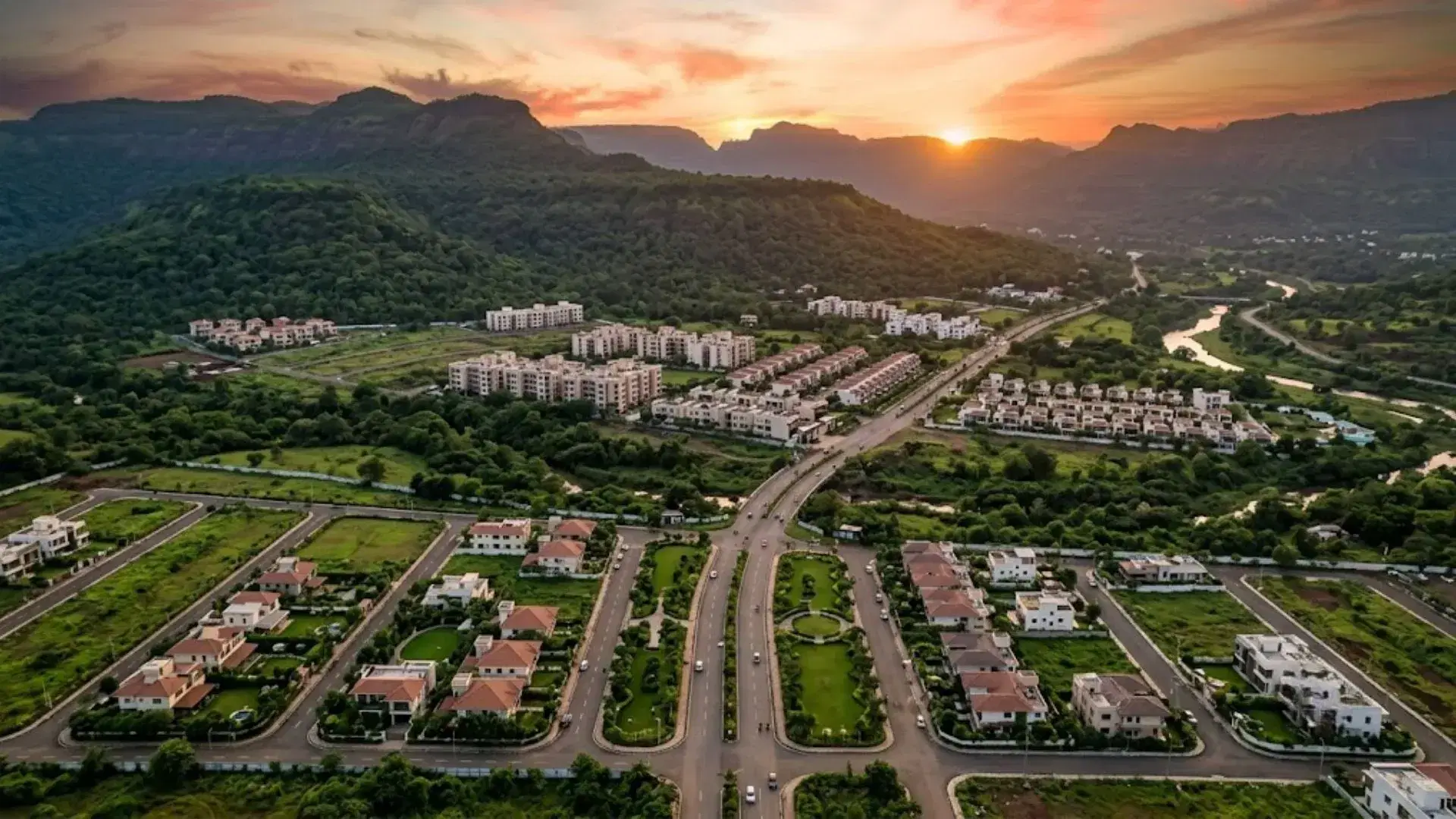
Mission Blue Zone by The House of Abhinandan Lodha is an 80-acre plotted development in Neral, designed around nature, wellness and community spaces. The project offers villa plots of 1,248 sq. ft. and above in the foothills of the Matheran hills. The project is registered with MahaRERA under P52000077814. It is planned as a master-planned development with plotted villas in various sizes. It offers 1,550 sq. ft., 1,862 sq. ft. and 2,249 sq. ft. plots in the development.
The project demonstrates how a large plotted community with private plots, internal infrastructure and open spaces can be developed outside the densely built-up environment of Greater Mumbai.
What Should Buyers Check When Looking Beyond Mumbai?
Comparability of properties advertised as “near Mumbai” increases with a larger search area, since big differences may exist with respect to access to services, required approvals and current development conditions.
Before deciding, check:
- Planning authority: Identify whether the property falls under a municipal corporation, local authority, MMRDA-notified area or another planning jurisdiction.
- Land use: Confirm whether it is a residential plot and check for NA status or any other permissions required.
- Title and boundaries: Confirm who owns the land, show the survey plan, and confirm the physical boundaries of the land.
- Road access: The physical approach road and legal right of approach to the land.
- Layout approvals: For plotted developments, review the sanctioned layout and relevant permissions.
- MahaRERA registration: Check if the project has been registered under the RERA Act where applicable.
- Current infrastructure: The applicant should state what is already built as opposed to what is proposed.
- Environmental restrictions: Since the area is around the eco-sensitive Matheran belt, one needs to understand the restrictions applying to the area and associated eco-sensitive and planning controls.
- Infrastructure within the project: Check internal roads, drainage, utilities and common areas rather than comparing plots only by size.
- Actual journey: Travel between the site and the Mumbai, Navi Mumbai or airport locations that will genuinely be used.
Conclusion
While Greater Mumbai’s land is increasingly scarce and suits re-development to high density (vertical development), the much larger MMR area offers opportunities for a different type of residential development such as planned plotted developments which would be difficult to develop in core Mumbai.
When looking to buy land outside of Mumbai, the fact that it is outside of the city does not necessarily mean that one is leaving the growth story of Mumbai behind. Looking at the metropolitan region as a whole to identify locations where there is available land that is supported by planning, infrastructure and connectivity is crucial. While distance from the city centre is an important factor, buyers should also assess the property's planning, access, infrastructure and intended use.
FAQs
Why is vacant residential land difficult to find within Mumbai?
Mumbai already has a high degree of urbanisation, with more than 70% of the MCGM area being built up. Thus, a major proportion of new residential supply is by way of redevelopment of existing stock as opposed to large tracts of virgin land being developed.
How large is the Mumbai Metropolitan Region compared with Mumbai city?
The MMRDA defines Greater Mumbai as approximately 437 sq. km of land, whereas the wider Mumbai Metropolitan Region is approximately 6,328 sq. km.
Why are locations such as Neral being considered for land ownership?
Neral has property options that include plotted developments on larger land parcels. Being on the rail network, at the foot of the Matheran hills in the MMR region, makes it an attractive alternative to very dense residential properties in central Mumbai.
Does better infrastructure automatically make land outside Mumbai a good purchase?
No. In addition to connectivity, title, permissible land use and approval(s) to develop the land and construct building(s) thereon, the road to the plot and environmental restrictions, amongst others, would need to be verified. A buyer must also verify the infrastructure provided by the developer for the plot(s) and verify if the plot(s) will serve the intended purpose(s).