Mumbai Land Price Explained: Why Redevelopment, Location and FSI Matter
29 Sep 2026
Two plots of land of similar dimensions can command vastly different prices in Mumbai. The main reasons for differences in prices, beyond location, are the limited amount of developable land in the city and the amount of real estate that can be constructed on a plot.
Parameters like FSI, road width, potential for redevelopment, zoning and permissions for construction determine the potential of a property. The supply of new residential properties in Mumbai comes largely from redevelopment of existing properties, with more than 70% of the land in the MCGM area having already been developed [1].
Therefore, the rate per square foot quoted for Mumbai land price is only the starting point. A meaningful comparison must also take into account the development rights and restrictions on the property.
What Actually Determines Mumbai Land Price?
Importantly, the land value in Mumbai is influenced by a number of factors:
Therefore, two plots in the same broad locality should not be compared only on the advertised ₹/sq. ft. rate.
How FSI and Road Width Affect Land Value
Floor Space Index (FSI) is the ratio of the total floor area allowed on a plot to the plot area.
A higher permissible FSI leads to more economically viable real estate, as it is possible to develop more built-up area on the same plot of land. The width of the adjacent road(s) is one of the factors that can affect the permissible FSI for residential and commercial plots, according to DCPR 2034.
*General DCPR 2034 framework through basic FSI, premium FSI and admissible TDR (that can actually be used). Proportions vary for each property according to its individual circumstances under the relevant legislation.
Therefore, FSI cannot be assumed based on a locality. Rather, it depends on several factors, including plot characteristics, road width, planning rules, etc. Further, redevelopment rules apply to some areas. Thus, a detailed check is required for a specific property.
Why Redevelopment Potential Matters in Mumbai
In the report, Knight Frank revealed that more than 910 housing societies entered into redevelopment agreements between 2020 and May 2025, releasing a total of 326.8 acres of land. These proposed projects are expected to accommodate over 44,000 units by 2030 [1].
In the case of a housing society that already exists, factors determining redevelopment value include:
- Area of existing buildings and number of occupants
- Rehabilitation liabilities
- FSI for redevelopment
- Premium FSI or TDR availability
- Area of plot and width of roads
- Costs of construction and approvals
- Area left to sell after rehabilitation
- Value of additional houses built
An occupied property can have significant redevelopment value once rehabilitation requirements and other applicable regulations are taken into account.
Why Zoning and Permissions Can Change the Price
While a high theoretical FSI of a plot indicates its high potential for development, in practice the available development potential cannot be fully utilised.
Before comparing prices, buyers should check:
- Land use permitted: What can be developed under the law?
- Reservations in Development Plan: Any reservation for road or amenities in respect of the plot?
- Applicable FSI: Which regulation applies to the plot?
- TDR/Premium FSI: Are additional development rights available?
- Road access (legal): Abuts a recognised road; what is its width?
- Existing structures: Authorised and redevelopment clause applicable?
- Approvals required: What permissions are required before construction?
A lower asking price per square metre for a given plot size does not automatically mean that the developer is offering better value. Restrictions on use may be concealed in the seemingly straightforward plot size, while a higher-priced alternative may offer more efficient development options.
Location Still Matters, but the Comparison Must Be Like-for-Like
Location certainly plays a major role in determining property values in Mumbai; however, development potential also plays a critical role.
Access to employment centres, rail and metro links, schools, hospitals and shopping centres affects demand for completed property and the value of underlying land for a parcel. This applies equally to a plotted development in the wider Mumbai Metropolitan Region and established western suburbs.
Redevelopment land within Mumbai (such as flats or a building plot within a redevelopment zone) should not be compared to planned residential development land outside of Mumbai’s core areas. The value of the first type of land is largely determined by the redevelopment economics, whereas the value of the latter greatly depends on the plot size and approved plan, as well as other factors including the availability of key infrastructure and ease of access to employment and social centres.
Mumbai Buyer’s Guides covering Neral vs Karjat for plots near Mumbai provide additional insight into the individual land markets of areas adjacent to the region of interest.
How Plotted Land in the Wider Mumbai Region Is Valued
Non-urban plotted development (i.e. outside Mumbai’s high-density core) commands a different price than redevelopment land in Mumbai.
Important factors include:
- Plot size and shape
- Land-use status
- Approved layout
- Internal roads and utilities
- Connectivity to Mumbai and Navi Mumbai
- Infrastructure within the project
- Surrounding development
- Project documentation and approvals
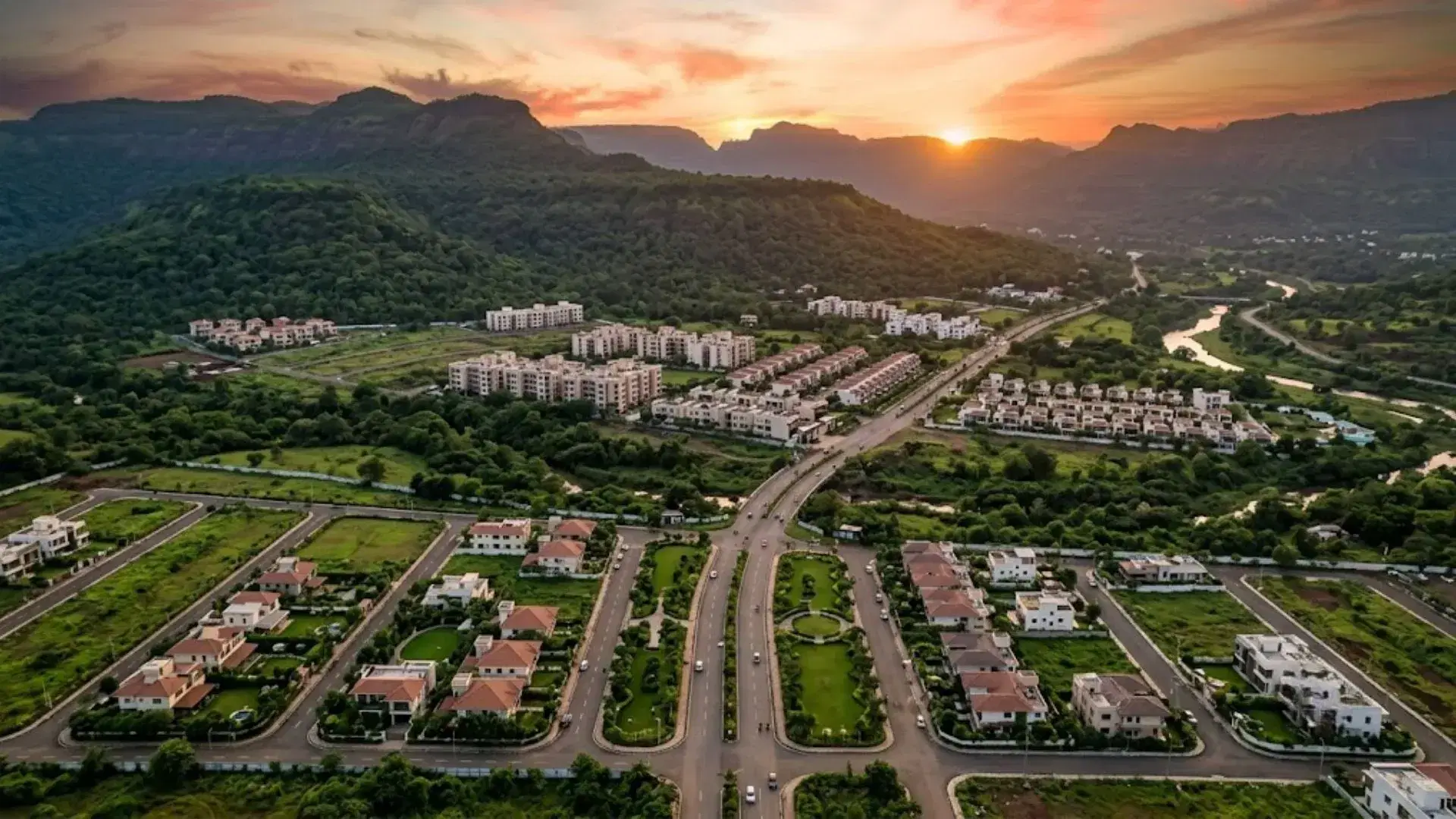
Golden Gateway Mumbai 3.0 in Neral, a part of HoABL’s Mumbai-region portfolio. Plots start from 210 sq. metres or 2,260 sq. ft. A plot in a planned development at Neral cannot be compared to a fully utilised redevelopment plot in Mumbai just by comparing the price per sq. ft. of the two properties.
What Should Buyers Check Before Comparing Mumbai Land Prices?
Don’t compare unlike properties before establishing that you are actually comparing like with like.
A useful checklist is:
- Check the exact micro-location and planning jurisdiction.
- Confirm permitted land use and zoning.
- Establish the applicable FSI provisions.
- Check the width and legal status of the abutting road.
- Check for Development Plan reservations or other restrictions.
- For existing properties, understand redevelopment and rehabilitation requirements.
- For plotted developments, verify the approved plan and the existing infrastructure.
- Verify title, survey boundaries and RERA registration (if applicable).
- Separate existing approvals from proposed future infrastructure.
Conclusion
Land prices in Mumbai cannot be measured on location alone. Factors such as FSI, road width, redevelopment potential, zoning and development permissions can greatly increase the yield from a plot of land, thereby pricing two plots of similar size at vastly different values.
The comparison of Mumbai prices with planned land in the metropolitan region would also be more meaningful if we first establish the different categories of property (redevelopment land vs plotted development) and establish their respective benchmarks for comparison after having established the respective rights, restrictions and major infrastructure provided for the property.
FAQs
What is FSI and why does it affect Mumbai land prices?
FSI shows how much floor space can potentially be developed on a plot of land and therefore how the land can be economically used. The development potential of a plot affects its value.
Does road width affect FSI in Mumbai?
Yes. The permissible FSI for residential and commercial plotted lands as per Mumbai’s general DCPR 2034 framework varies with the width of the adjoining road. The actual FSI will depend upon applicable regulations and characteristics of the property in question.
Why can redevelopment land be valuable even when a building already exists?
Redevelopment of an old structure can be undertaken and existing residents rehabilitated while generating additional saleable area. Issues that need to be addressed are FSI, rehabilitation requirements, road width restrictions, construction cost vs. site value, etc.