How Do I Buy Land in Ayodhya as an Investment Safely?
06 Oct 2026
Ayodhya has attracted buyers from across India since the Ram Mandir put the city in the national spotlight. But land is easy to get wrong. A plot that looks like a good deal may turn out to be agricultural land, have several claimants, or sit in a layout that was never approved.
If you are looking at how to buy land in Ayodhya as an investment safely, first be clear about your purpose. Check the seller's documents with the government records, have your own lawyer review the property, and keep all payments through the bank.
What is attracting investors to Ayodhya
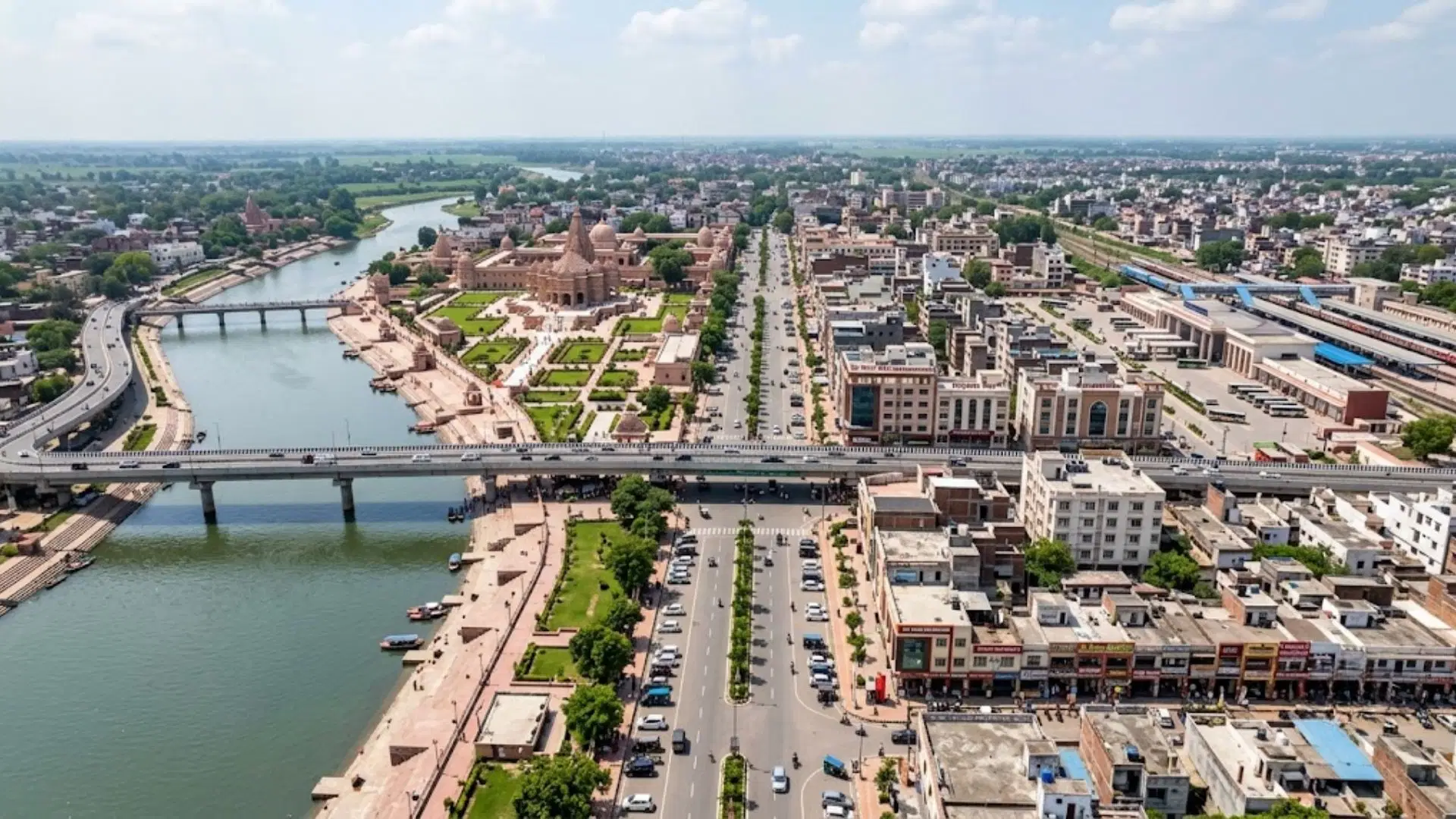
The Ram Mandir and the tourism around it are major reasons buyers are watching Ayodhya. Infrastructure work is adding to the city's appeal. Land near visitor routes has received attention, but a busy market also attracts brokers and sellers who may not have clear rights over the property.
The value of a plot depends on more than its location. Its legal status, permitted use and your holding period matter too. Before thinking about returns, make sure the land itself is safe to buy.
Decide why you are buying
Think about why you are buying the plot before you start comparing properties. A plot you plan to resell soon will need a different approach from one you intend to hold for ten years. The checks will also vary if you want to build a home rather than use the land for commercial purposes.
Agricultural land may cost less, but it comes with more restrictions. You cannot simply start construction on it, and Uttar Pradesh has specific rules on who can buy farmland. Residential plots in approved layouts are usually simpler to develop and resell. For commercial plots near visitor routes, check whether the land is actually approved for the use you have in mind.
For plotted projects, ask for the UP-RERA registration number and verify it yourself. HOABL lists its available plots in Ayodhya and The Sarayu Gold. The same checks should be made for any project you consider. Treat a seller's quoted return as an estimate, not a promise.
Legal checks before you pay
Hire an independent property lawyer who has no connection with the seller or broker. Your lawyer should check the ownership history, revenue records, approvals and other documents.
Check the title and ownership history
Start by finding out who owns the plot and how that person got it. The lawyer should trace earlier sale deeds, gift deeds, partition deeds and wills, often going back 30 years or more.
Family properties can cause problems when land has passed between generations without a formal partition. If there is a missing link in the chain, ask for the supporting document or a written explanation before proceeding.
Check encumbrances and mutation
An Encumbrance Certificate, or EC, shows registered transactions involving the property, including mortgages, for the period covered by it.
Also check mutation, known as Dakhil Kharij in Uttar Pradesh. It updates the revenue record with the owner's name. A seller may have a registered deed while the revenue record still shows someone else. That mismatch needs to be investigated.
Check zoning, ADA and UP-RERA
ADA and the Master Plan
The Ayodhya Development Authority, or ADA, controls land use in its jurisdiction under the Ayodhya Master Plan 2031. Ask which zone the plot falls in and whether your intended use is allowed.
Land marked for a green belt, road widening or institutional use cannot be developed as a housing project simply because the seller says it can.
Land-use conversion
If the plot is agricultural, check whether its use has been legally changed. In Uttar Pradesh, this is covered under Section 143 of the UP Zamindari Abolition and Land Reforms Act, 1950.
Do not rely on a promise that the conversion is “in process”. Ask for the actual order.
UP-RERA for plotted projects
For a plotted development, ask for the ADA layout approval and UP-RERA registration number. Search the number on the UP-RERA website and compare the project name, promoter, approved area and completion date with the brochure.
HOABL's buyer process includes a RERA registration that can be verified, and its project documents page provides approvals and legal references for selected developments. Apply the same check to other projects too.
Check UP Bhulekh and IGRSUP
UP Bhulekh
You can do an initial land-record check yourself. The portal layout may change, so follow the current options shown.
- Select the district, tehsil and village.
- Search by Khasra number, Gata number or owner name.
- Open the Khatauni and check the owner's name, plot area, land type and any note about a loan or dispute.
- Compare those details with the seller's sale deed.
A different spelling, area or Gata number is a reason to stop and ask questions.
IGRSUP
IGRSUP, run by the Stamps and Registration Department, provides circle-rate information, e-stamp and registration services, and registered-document searches used for Encumbrance Certificates.
Online records are useful, but your lawyer should compare them with the tehsil and sub-registrar records.
Visit the plot yourself
A map or brochure cannot tell you everything about a plot. Visit the property yourself if possible, or have someone you trust do it. Check the boundaries against the survey map and confirm that the road leading to the plot is public or has a registered right of way.
Flooding is another thing to look into in Ayodhya because of its location along the Saryu. Ask about the plot's past waterlogging or flooding issues. Low-lying land, nearby drains, or a water body can create problems during construction and may also affect resale.
Check the price and payment
The circle rate is the minimum property value set by the government for calculating stamp duty. The market rate is simply the price the buyer and seller agree on, so it may be higher or lower.
Before agreeing to the seller's price, check recent registered sales in the same area to see how much similar plots have actually sold for.
In Uttar Pradesh, stamp duty has been 7% for male buyers, along with a 1% registration fee. These rates and any available concessions, such as those for women buyers or family transfers, can change, so check the latest figures on IGRSUP. For a Rs 50 lakh purchase, 7% stamp duty plus a 1% registration fee would come to around Rs 4 lakh.
Pay through bank transfer to the seller's account and keep the receipts. Cash payments for immovable property are restricted under income tax rules, and bank records give you a clear payment trail.
Do not pay a large booking amount until your lawyer has reviewed the property.
Watch for common fraud patterns
Some warning signs appear repeatedly in land deals:
- The same plot is sold to two buyers, or land belonging to a relative or trust is sold without proper authority.
- Agricultural land is marketed as residential land using an unapproved layout.
- A forged or expired Power of Attorney is used.
- A broker pressures you to pay immediately because another buyer is supposedly waiting.
For example, a buyer may see a registered deed in the seller's name and assume the title is clear. Later, the Khatauni may still show the seller's late father, with other heirs having a claim.
In another case, a buyer may purchase a cheap plot in a new colony and later find that the ADA did not approve the layout. Both problems could have been found before payment.
After you buy
Registration is not the final step. Apply for mutation at the tehsil so the revenue record shows your name, then check UP Bhulekh to confirm the entry.
Keep the original sale deed, mutation order, stamp duty receipt and Encumbrance Certificate together. Keep scanned copies separately.
If you are an NRI
What FEMA allows
Under FEMA, NRIs and OCIs can buy residential and commercial land without RBI permission, paying from NRE, NRO or FCNR accounts. They cannot buy agricultural land, plantation property or a farmhouse unless it comes through inheritance.
Power of Attorney
If you cannot attend registration, a Power of Attorney can allow a relative or another authorised person to sign for you. Prepare it for the specific plot and sale and have a lawyer review it.
A PoA signed abroad may need notarisation and either an apostille or Indian consular attestation, depending on the country.
Tax and repatriation
An NRI seller may have TDS obligations under Section 195 of the Income Tax Act and capital gains tax may also apply. The treatment depends on the circumstances and holding period.
Sending sale proceeds from an NRO account can involve additional requirements, including a CA's certificate. Speak with your bank and CA before making the first payment.
Before you commit
Buying land in Ayodhya as an investment safely comes down to checking the facts before paying. Know your purpose, verify the title, match the deed with UP Bhulekh, confirm land use and approvals with the ADA and UP-RERA, visit the plot, and pay through the bank.
Ask your independent lawyer for a written report before handing over a substantial amount.
FAQs
Can I buy agricultural land in Ayodhya as an investment?
Residents can buy it subject to Uttar Pradesh revenue rules, but you cannot build on it until its use is changed under Section 143 of the UPZA & LR Act. NRIs and OCIs cannot buy agricultural land unless it comes through inheritance. Have a lawyer confirm what applies to you.
Which documents should I check before paying a booking amount?
Ask for the sale deed chain, recent Encumbrance Certificate, Khatauni from UP Bhulekh, mutation records, ADA layout approval and UP-RERA number for plotted projects. Your own lawyer should review them before you pay.
What is the difference between circle rate and market rate?
The circle rate is the government's minimum value for calculating stamp duty. The market rate is the price agreed between the buyer and seller. Stamp duty applies to whichever is higher.
Is mutation necessary after buying land?
Yes. Registration records the sale, while mutation updates the revenue record in your name. Without it, selling, borrowing against the land or proving ownership can become harder.
Can an NRI buy land in Ayodhya through a Power of Attorney?
An NRI can buy residential or commercial land and have a PoA holder sign at registration. The PoA should be written for the specific plot and sale and carry the required notarisation and apostille or consular attestation.